

A practical, athlete-centered approach to cheering, handling frustration and starting the ride home.
AI-generated editorial illustration of a fictional scene. No actual athlete, team or event is depicted. Decorative maps, calendars and screens are conceptual, not factual records or instructions.
Picture a hypothetical close game. A player looks toward the sideline after a mistake. One adult is calling for a tactical adjustment, another is protesting the official’s decision, and a third is applauding the next effort. All three may believe they are helping. From the player’s position, the messages are very different.
As October calendars fill for families whose sports are in season, this is a useful time for a small reset. What does support look like to the athlete receiving it? The question is more practical than a promise to be a perfect sports parent. It makes room for enthusiasm while giving adults a clearer role.
This is an editorial guide with proposed family activities, not a claim that any single phrase will improve performance. The goal is a sideline that players can experience as supportive and respectful.
Ask before deciding what encouragement means
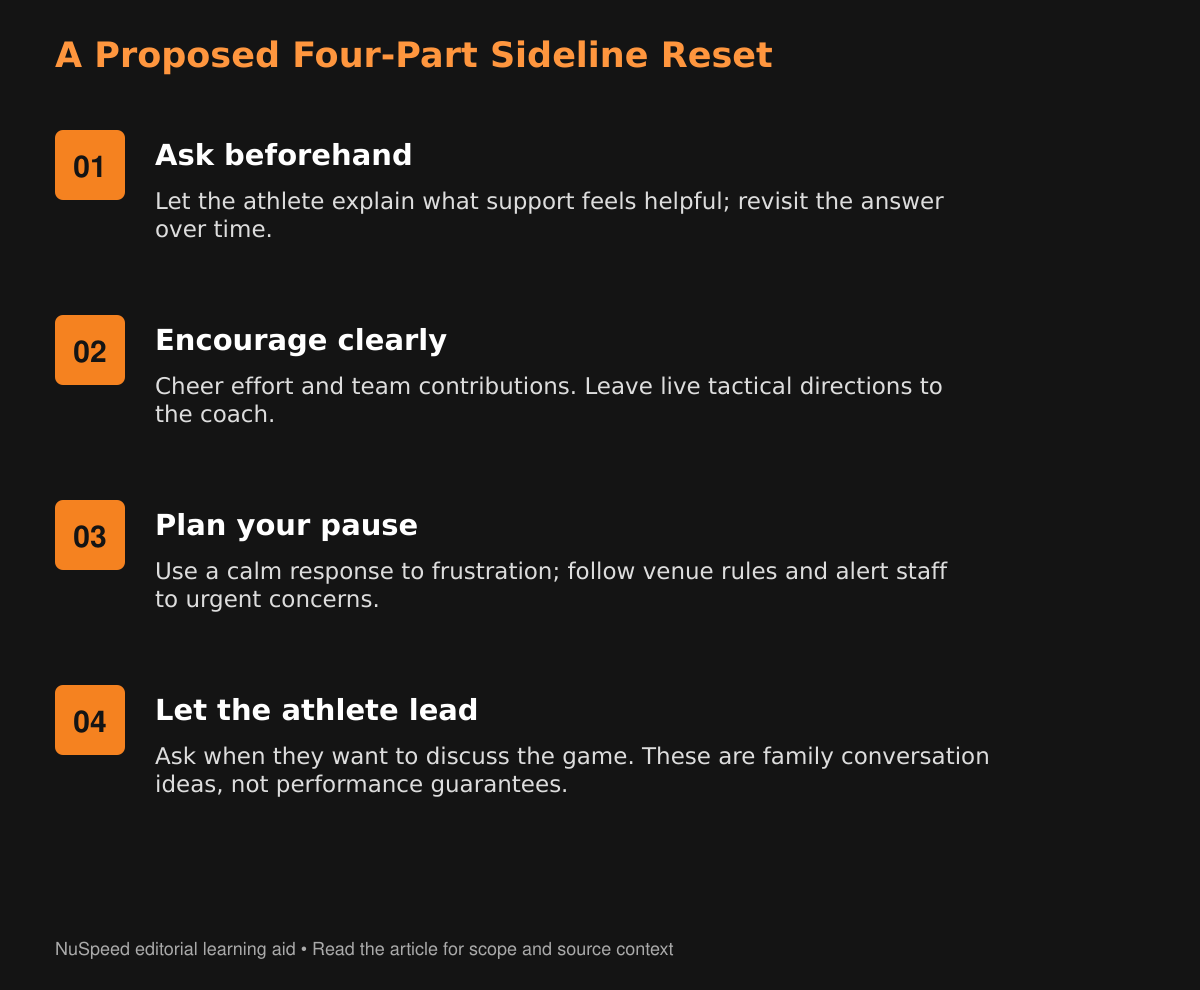
The Positive Coaching Alliance’s sideline self-regulation guidance recommends asking athletes how they experience adult behavior and preparing a response to frustrating moments before a game. A calm conversation away from competition is a sensible place to begin.
One suggested prompt is to ask what kind of cheering feels useful. Listen without turning the answer into an argument about the family’s investment.
Try a small agreement for the next game, then check whether it helped. Leave room for the athlete to change their mind.
Choose words that leave room to play
Parents can recognize a good decision, a teammate’s effort or a respectful response to a difficult moment. A cheer does not need to contain a correction. The Positive Coaching Alliance’s parent–coach collaboration resource specifically identifies the confusion that can arise when sideline instructions conflict with coaching and recommends encouragement without directions.
Our proposed experiment is to notice the verbs in your own cheering for one game. Are you mostly telling players to pass, shoot, run, move or stop? Try leaving those decisions with the people playing and coaching. Applaud a sequence you enjoyed, then let the next play unfold.
Support can also extend beyond the athlete you came to see. Learn teammates’ names through appropriate team channels, celebrate contributions that do not make the highlights and offer the same courtesy to opponents. Avoid public criticism of another child. A sideline audience has only a partial view of what that player has been asked to do.
Have a plan for the difficult minute
Everyone can identify a moment that tests their patience. Make a simple plan before it arrives: pause, step away from the immediate crowd if appropriate and return when ready to contribute calmly. This adapts the preparation and self-reflection approach in PCA’s self-regulation resource; it is a suggestion, not a guarantee that frustration disappears.
For ordinary questions about playing time or tactics, use the team’s established communication process rather than trying to hold a conference during play. A mandatory waiting period should never become a reason to ignore an immediate safety concern. Alert the appropriate event staff when urgent help is needed.
PCA’s guidance on sideline intervention also emphasizes clear expectations and respectful responses to disruptive behavior. Families can help by learning the venue’s conduct rules and asking staff to handle problems instead of escalating an argument themselves.
Give the ride home a little breathing room
Here is another proposed activity: ask whether the athlete wants to talk about the game now, later or not today. Accept the answer. If the conversation does begin, let the player describe a moment before supplying your own interpretation.
There is room to discuss accountability, disappointment and mistakes. Those conversations are more useful when they start with something specific rather than a sweeping judgment about effort or character. An adult can also acknowledge their own behavior plainly and make a different plan for next time.
The sideline contribution is often small: a welcoming face, respectful applause, patience when a result hurts. Our editorial view is that these ordinary choices deserve the same care adults give to schedules and equipment. The athlete should have space to play the game and to tell their own story afterward.
Keep learning the games and the people behind them with NuSpeed Sports Whistle at nuspeednetwork.com.
AI disclosure: AI-assisted research and drafting. Sources checked October 3, 2026.
Sources
- Positive Coaching Alliance: Sideline Self-Regulation Tips for Parents/Caregivers
- Positive Coaching Alliance: Turning Parent/Caregiver Challenges into Collaboration
- Positive Coaching Alliance: Intervening on the Sidelines