
The participation numbers tell a growth story. The next step is coverage that explains the decisions, preparation and skill on the field.
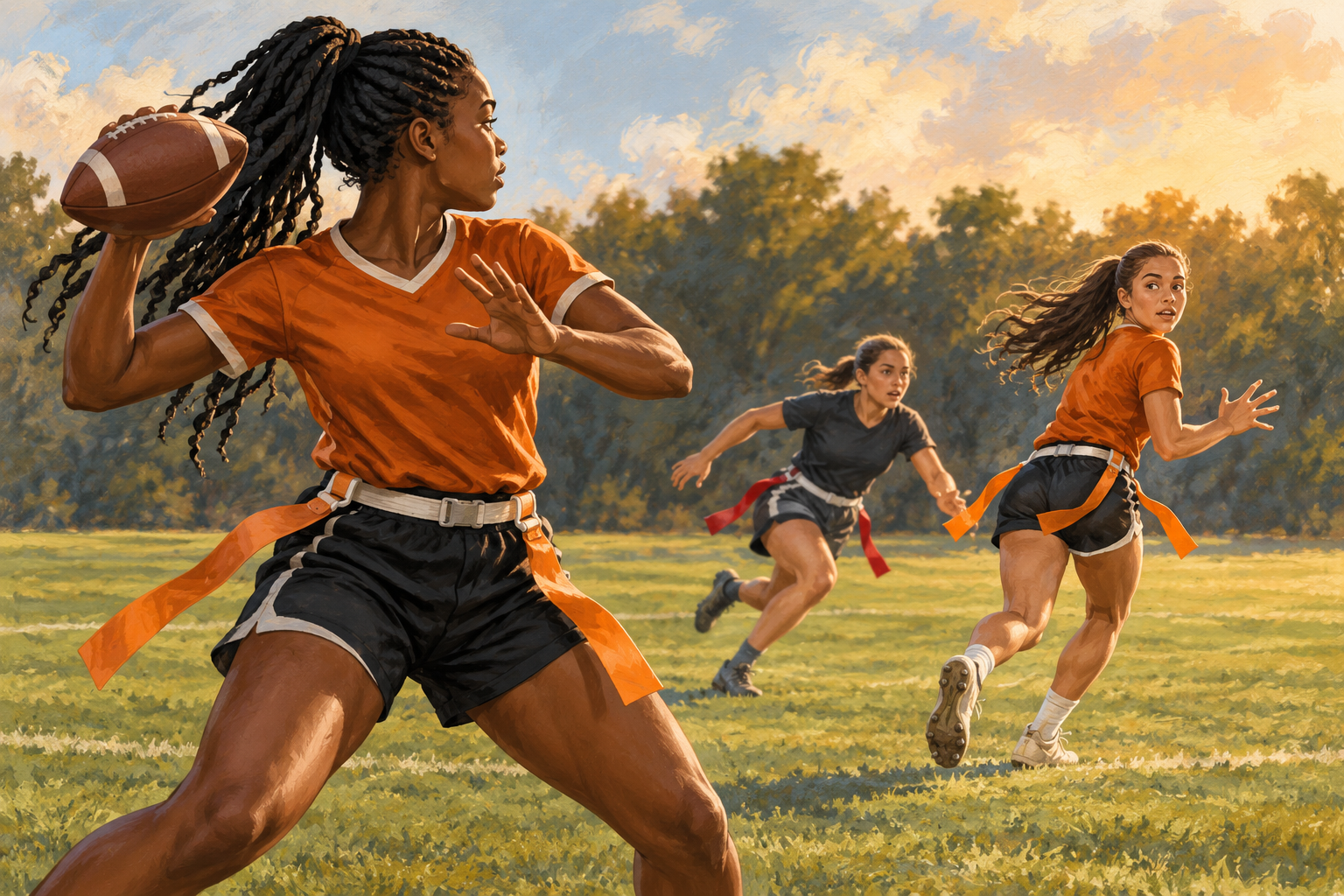
AI-generated editorial illustration of a fictional scene. No actual athlete, team or event is depicted. Decorative maps, calendars and screens are conceptual, not factual records or instructions.
Imagine the same girls flag-football play described two ways. One caption calls it another sign of a growing sport. The other explains how a receiver created space, how the quarterback recognized it and how a defender nearly closed the passing window. The growth story has value. The second description gives readers a reason to watch the next snap.
This is an editorial argument for that closer attention, not a report from a particular game. No athlete interviews or local match observations are represented here. For NuSpeed Sports Whistle, the proposed standard is straightforward: explain the competition and make room for players to describe the work behind it.
The growth is substantial. The coverage can go deeper.
In its October 1, 2026 participation release, the National Federation of State High School Associations reported 102,360 girls flag-football participants in 2025–26, up from 68,847 the previous year. The number of schools reporting participation rose from 2,736 to 3,990. Those are national survey figures, not counts of local teams or proof that every community now offers the sport.
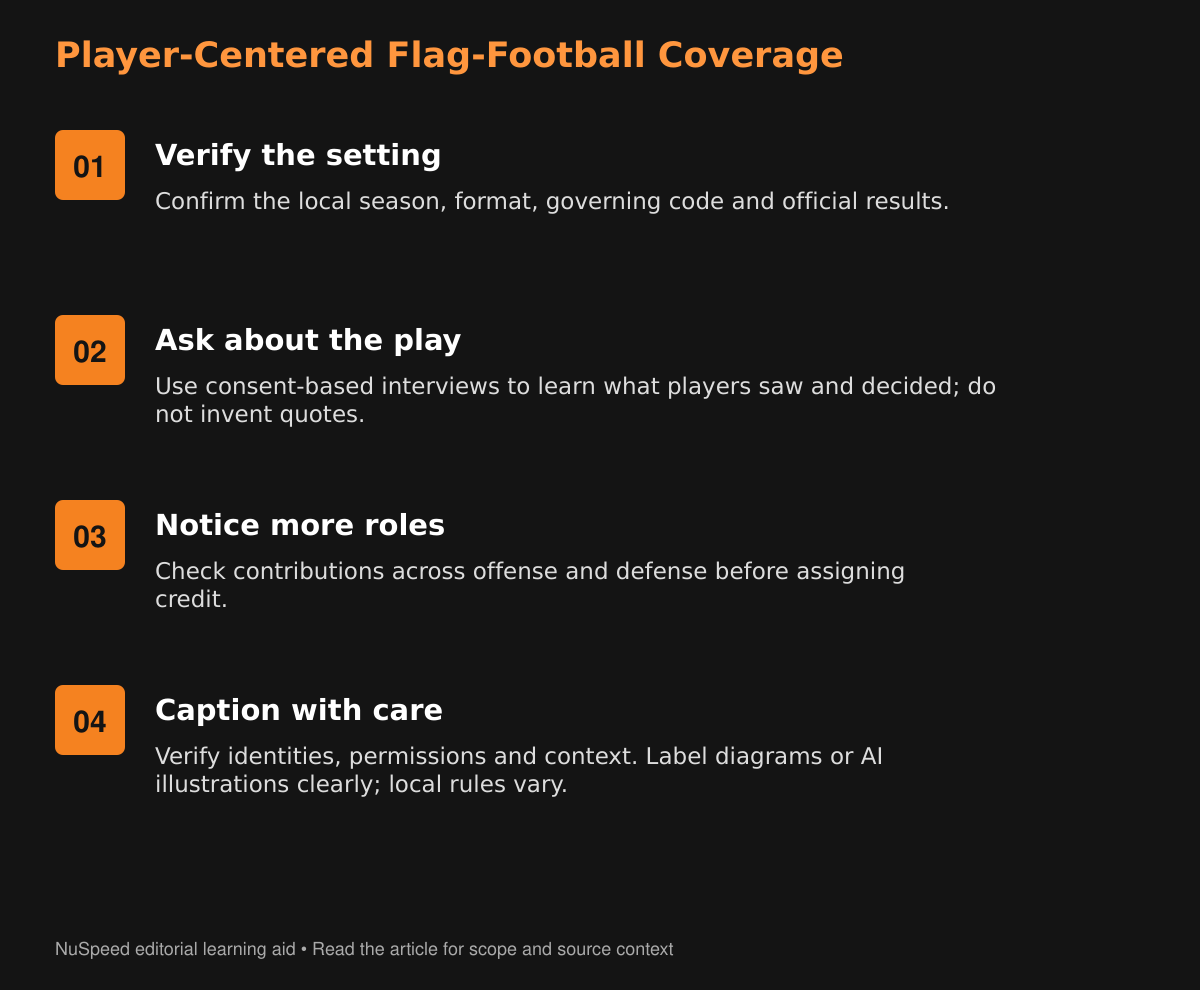
They provide a timely opening for October coverage. They should not become the entire assignment. A reader also needs to know which team is playing, what the competition format allows, what changed during the game and whose contribution made a difference.
Our editorial recommendation is to resist treating each athlete as a symbol before treating her as a player. A profile can explore opportunity and access while still asking about a route, a defensive responsibility, a practice habit or a decision the athlete would like to make differently next time.
Learn the local game before explaining it
Flag football is not a single interchangeable format. NFHS publishes a national high-school rules framework, and its 2026–27 changes include an additional field option. Adoption and calendars must still be checked locally. For example, Tennessee’s association states that its member schools will use the 2026–27 NFHS book for the spring 2027 season. That is a Tennessee example, not a nationwide season schedule.
Before describing a local play, verify the governing rules with the school or competition organizer. Establish the number of players, field configuration, relevant timing rules and any local modifications. Do not import a rule from a professional highlight or a recreational league because the flags look familiar.
Readers benefit when a writer translates only the rule needed to understand the moment. A short explanation beside the play is usually more inviting than an unsupported declaration that a strategy always works.
Ask questions that reveal decisions
A proposed reporting exercise begins with three questions for a consenting athlete: What did you see before the snap? What changed as the play developed? What have you been practicing that showed up today? These are interview prompts for future human reporting, not quotations gathered for this draft.
A fourth question can invite the athlete to identify a teammate whose contribution was easy to miss. Then verify that contribution through observation, available game material or a separate interview. An unthrown route, a communicated adjustment or a well-timed defensive approach may deserve explanation, but a writer should establish what happened before assigning credit.
Seek more than one perspective. The athlete who appears most often in the scoring summary may not explain every important part of the game. A defensive player, a developing player or a captain can offer a different view when access and school media procedures allow.
Make the visuals as specific as the writing
For future coverage, choose images that help readers understand play: a legal flag pull, a passing sequence, a team discussion or preparation for the next possession. Verify names and captions, follow applicable permissions and school procedures, and respect athletes who do not want an interview or image used.
Avoid illustrations that could be mistaken for photographs of a real game. A clearly labeled diagram can explain space or timing without inventing a winning play. Likewise, a headline should not turn one unverified performance into a scholarship prediction or a promise about an athlete’s future.
Girls flag football’s expanding participation deserves attention. Sustained attention requires the ordinary discipline of sports journalism: accurate results, understandable rules, useful questions and players whose voices are actually heard. Our editorial proposal is to begin there and keep returning long after the novelty headline has passed.
Keep learning the games and the people behind them with NuSpeed Sports Whistle at nuspeednetwork.com.
AI disclosure: AI-assisted research and drafting. Sources checked October 3, 2026.
Sources
- NFHS: 2025–26 Participation Survey Release, October 1, 2026
- NFHS: Flag Football Rules and 2026–27 Changes
- TSSAA: Girls Flag Football Rules and Spring 2027 Adoption