
Build the weekend around verified schedules, flexible logistics, and clear adult responsibilities before the bracket starts moving.
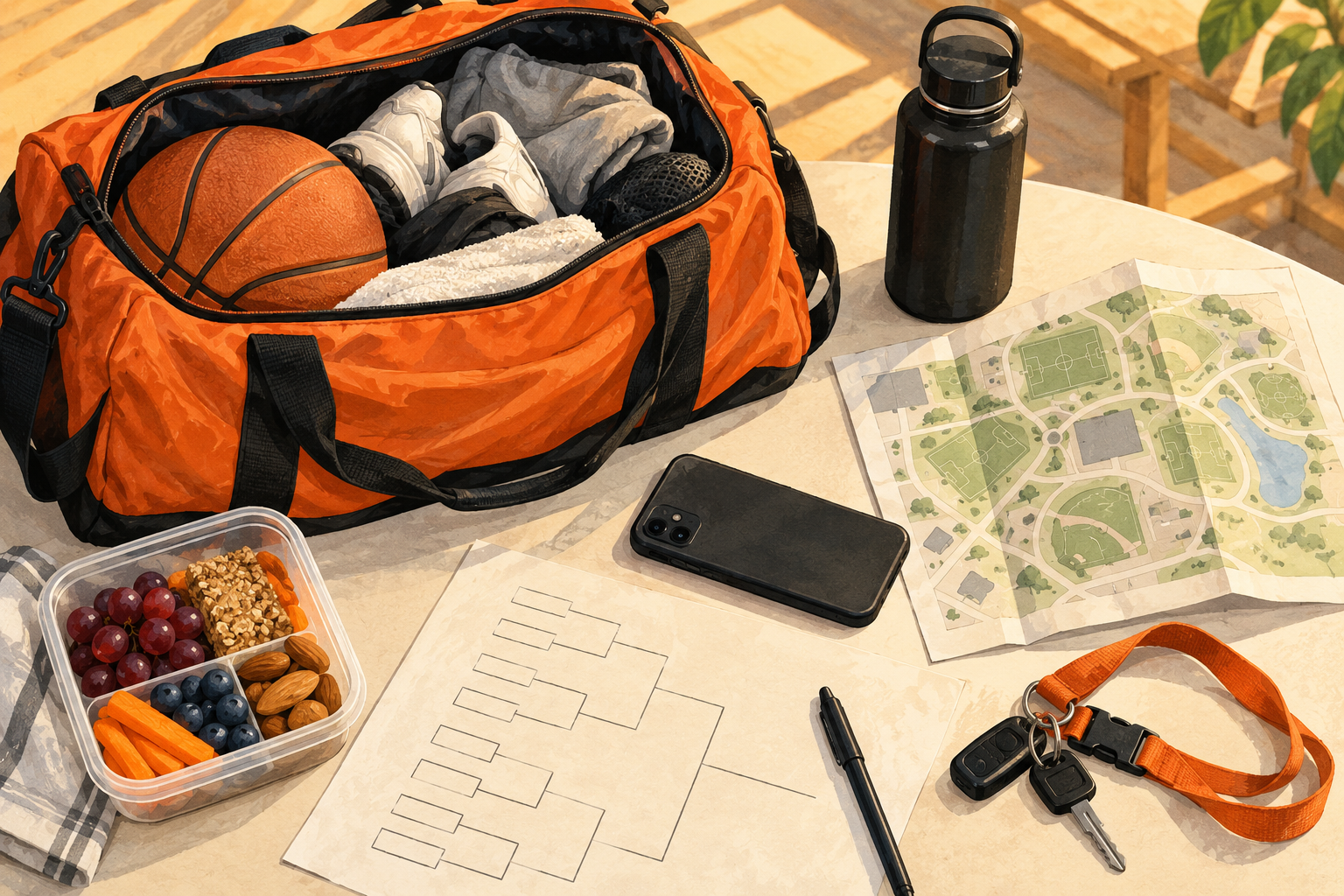
AI-generated editorial illustration of a fictional scene. No actual athlete, team or event is depicted. Decorative maps, calendars and screens are conceptual, not factual records or instructions.
A tournament schedule can look tidy on a phone and feel very different when the family tries to live it. Venue changes, long gaps, overlapping responsibilities, and an uncertain final game all belong in the planning conversation. A realistic plan leaves enough flexibility for competition while making clear who is responsible for transport, supervision, and the people whose weekend extends beyond the playing surface.
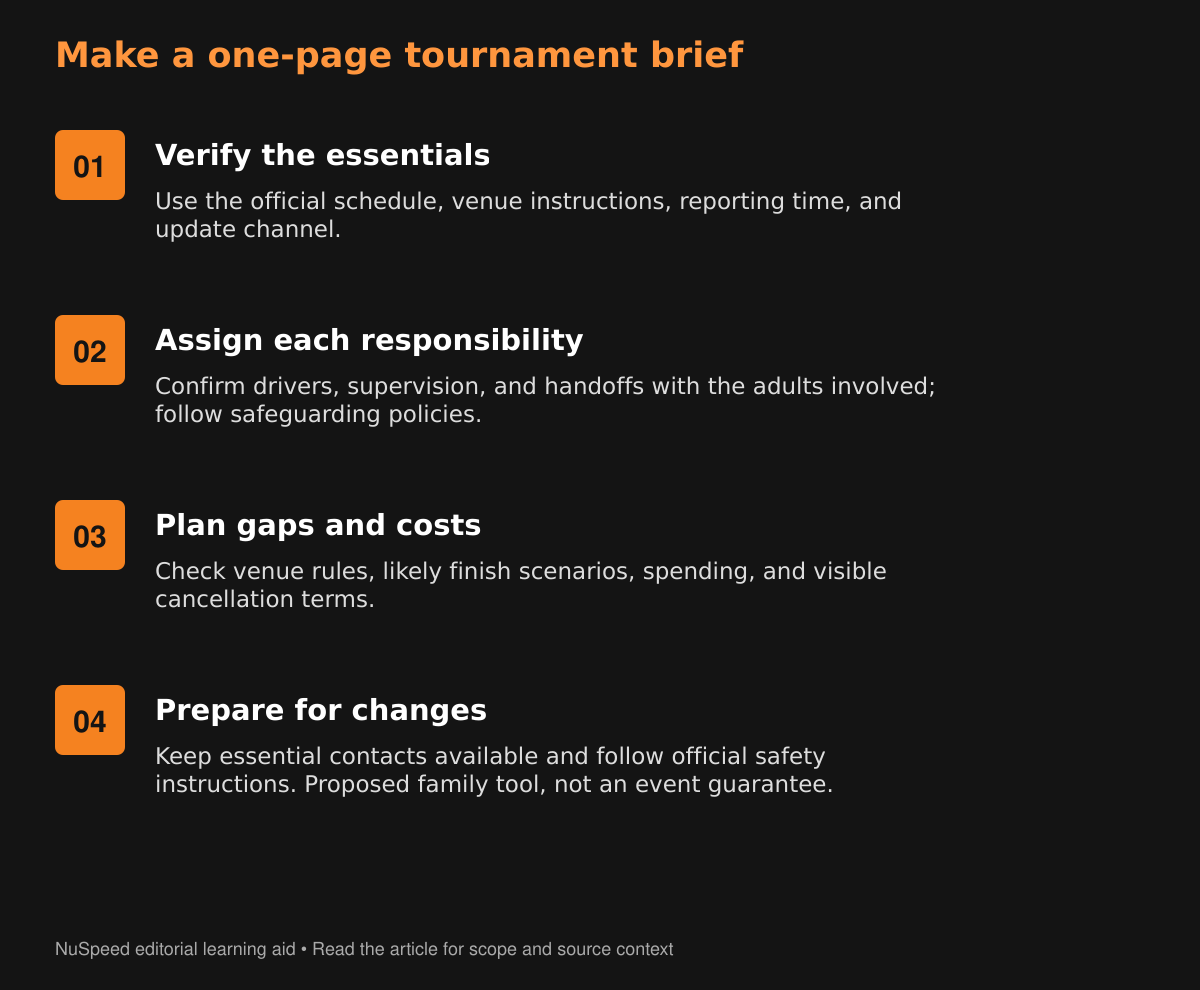
The first step is to separate confirmed information from assumptions. Use the organizer’s current schedule and event instructions. Record the venue address, required arrival time, parking guidance, admission arrangements, and where updates will appear. A forwarded image may help in the moment, but it can become outdated without warning. Keep a link to the authoritative event page and note when the schedule was last checked.
Work backward from the first responsibility
Our editorial recommendation is to plan around the required arrival, not the advertised start. Build in time for the route, parking, walking to the right entrance, and finding the team. The buffer should reflect the actual venue and the family’s needs; there is no universal number of minutes that makes every journey sensible. If access arrangements matter, confirm them directly with the organizer before departure.
Next, identify which adult is handling each segment. Driving to the venue, staying during the event, collecting a sibling, and getting everyone home are separate jobs. Put actual names beside them after those adults agree. If responsibility changes during the day, decide the handoff place and communication method in advance. Do not assume that being near the same field means someone has agreed to supervise.
For organized team travel involving minors, safeguarding requirements also matter. The U.S. Center for SafeSport’s transportation and lodging guidance describes expectations within the U.S. Olympic & Paralympic Movement, including observable and interruptible interactions and required parental consent in covered situations. Its lodging guidance addresses room arrangements and checks, with defined exceptions. Confirm the current policy adopted by the specific organization rather than treating a generic carpool plan as sufficient. Source: U.S. Center for SafeSport transportation and lodging guidance.
Plan for the gap and the last game
The hours between contests deserve attention. Identify where the family can wait, whether leaving and reentering is allowed, and what food or coolers the venue permits. Check facility rules before packing. Give the athlete’s coach authority over team reporting times and preparation; a family itinerary should support those expectations rather than inventing an additional training or recovery routine.
Also sketch the latest plausible finish. Tournament progress may affect departure, lodging, or other commitments. Review the event format and ask the organizer what is known, while recognizing that delays can change estimates. If the household has a hard departure constraint, tell the coach early. Discovering that conflict after advancing in the bracket creates a much more difficult conversation for everyone involved.
Use a small plan with clear ownership
We propose a one-page tournament brief with four sections: confirmed schedule, adult responsibilities, spending limits, and contingency contacts. This is an editorial organizing tool, not an official event document. Keep it short enough that the adults who need it will actually read it. Sensitive medical or identity information should stay in the organization’s approved private channels rather than a widely shared group sheet.
For spending, identify the expected costs and who is paying. Include admission, parking, food, and any accommodation. Check cancellation terms before booking something whose usefulness depends on a result. If teammates suggest an optional group meal or extra activity, the family should be able to decide based on its own resources and schedule. An invitation should remain an invitation.
Finally, agree on the update path. Decide who checks official messages and how that person tells the others about a material change. Carry a charged phone and retain essential details somewhere available if reception is unreliable. A weather interruption or venue evacuation requires the official safety instructions, not an improvised shortcut back to the next game.
The most useful tournament plan is one the family can adjust without repeatedly starting over. Confirm the essentials, assign the responsibilities, and leave some space unclaimed. That creates a better chance for the weekend to include the part everyone came for: watching the athlete compete and being present for the experience.
For more practical youth-sports coverage, visit NuSpeed Network at nuspeednetwork.com.
AI disclosure: This draft was created with AI assistance using the linked sources. It is pending human editorial review and approval before scheduling or publication.
Sources