

A practical family conversation about fees, travel, time, and the commitments worth making before the first practice.
AI-generated editorial illustration of a fictional scene. No actual athlete, team or event is depicted. Decorative maps, calendars and screens are conceptual, not factual records or instructions.
The registration screen asks for a decision in dollars. A family has to make a decision in weekends, rides, work schedules, equipment, and everything else already on the calendar. Before choosing a team or renewing a place, it helps to put that larger commitment on paper. A manageable season should leave enough room for the rest of the household to function.
Cost is a genuine participation issue. The Aspen Institute’s Project Play reports that its 2024 parent survey found average spending of $1,016 on a child’s primary sport, a 46 percent increase from 2019. That national figure describes survey results; it is neither a local price quote nor a spending target. Families should build their plans from the actual program’s requirements. Source: Project Play’s discussion of the youth-sports cost crisis.
Ask what the fee leaves out
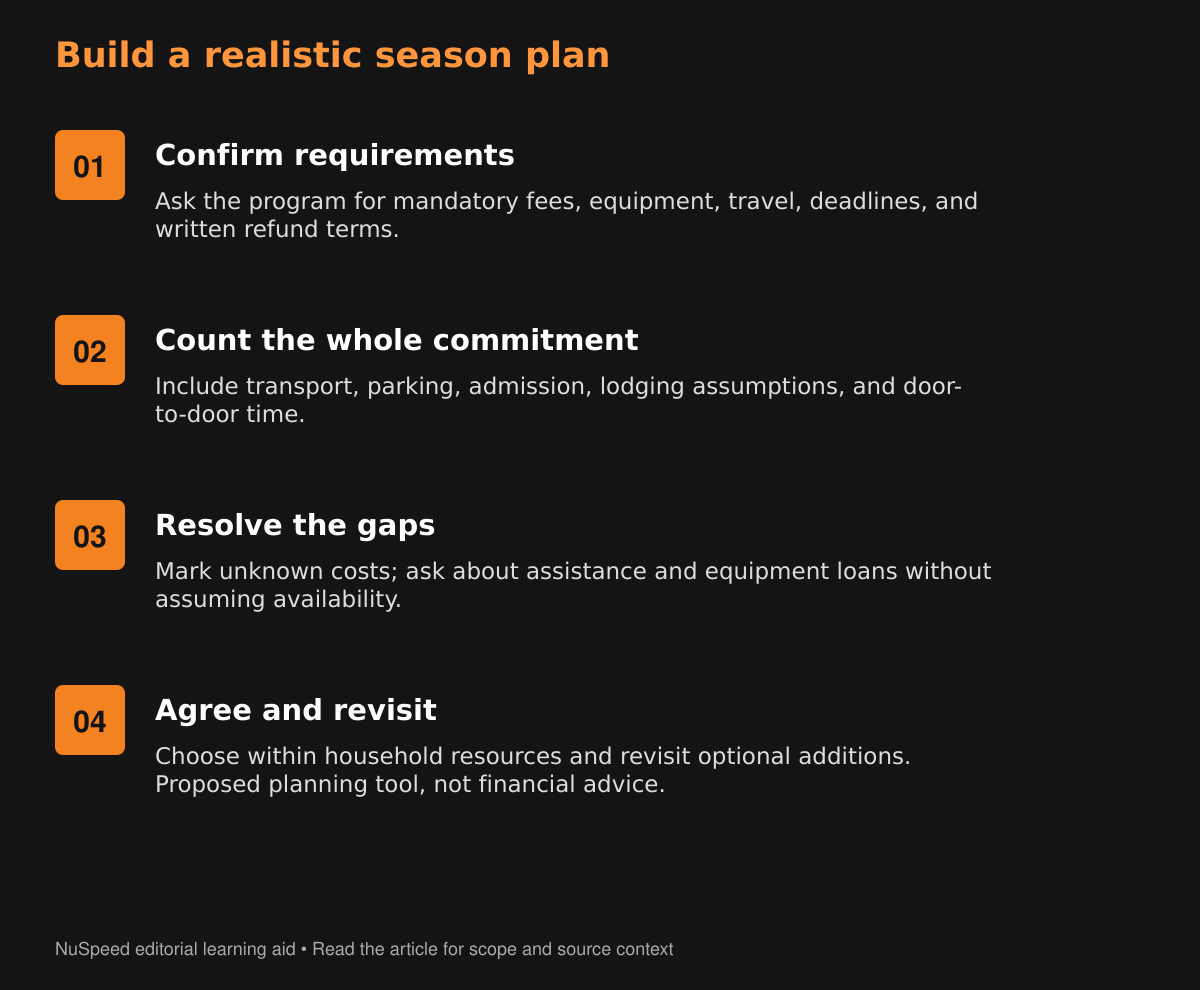
Start with a written list from the organization. Does registration include the uniform, facility access, tournament entries, referee costs, or insurance? Are there separate membership fees? Which purchases are mandatory, and which are optional? Request the payment schedule and the cancellation or refund policy before assuming a deposit can be recovered. If information is missing, mark it as unknown rather than quietly putting zero in the budget.
Travel deserves its own conversation. A schedule with nearby practices can still contain distant competitions, parking charges, admission for accompanying adults, and meals away from home. Ask whether overnight travel is expected and whether families must book through a designated lodging program. Those answers may matter more than the headline registration price. Obtain current written terms directly from the program; another family’s experience last year may be incomplete.
A proposed four-part season sheet
Our editorial recommendation is a simple planning sheet with four sections: required costs, likely extras, time commitments, and unresolved questions. This is a proposed family tool, not a financial product or a guarantee of affordability. Put real quotes beside required expenses. List travel assumptions separately, including the number of adults and children traveling. Keep optional purchases visible so they do not gradually become invisible obligations.
For time, count the door-to-door commitment. A practice slot excludes the drive, pickup queue, and time needed to coordinate another child’s activity. Record which adult is actually available for each recurring trip. If a carpool is essential, confirm that it exists and follows the organization’s transportation and safeguarding rules. A plan built on someone else being available needs their agreement, not a hopeful note beside a name.
Leave space for an unexpected expense without pretending every household can absorb one. If the basic commitment already exceeds the family’s available resources, the next step can be asking about payment arrangements, assistance, equipment loans, or a less travel-intensive option. Availability varies, so request specifics and deadlines. A program should explain its process without requiring a family to defend why it is asking.
Let the athlete help define value
Ask the young person what they most want from the season. Time with friends, a new skill, a particular competition, and simply trying the sport are different goals. A more expensive package may include opportunities the athlete does not want or cannot realistically use. The family can take ambition seriously while choosing a level of commitment it can sustain.
Our editorial view is that adults should keep household affordability separate from a child’s obligation to perform. Paying a fee does not create a debt to be repaid through goals, medals, or selection. Explain the boundary plainly: this is what the family can support, and these are the available choices. Avoid asking a child to promise results in exchange for participation.
Revisit the sheet once the actual schedule arrives and again before optional additions. Compare the season you agreed to with the season being offered. If extra travel or training appears, ask whether it is required and what declining would mean. The useful outcome is a clear agreement among the adults, the athlete, and the program about what participation involves. That clarity belongs at the beginning, while there is still room to choose.
For more practical youth-sports coverage, visit NuSpeed Network at nuspeednetwork.com.
AI disclosure: This draft was created with AI assistance using the linked sources. It is pending human editorial review and approval before scheduling or publication.
Sources