

A late-season guide to reduced minutes, unfamiliar assignments, and helping an athlete stay engaged without dismissing disappointment.
AI-generated editorial illustration of a fictional scene. No actual athlete, team or event is depicted. Decorative maps, calendars and screens are conceptual, not factual records or instructions.
A smaller role can feel especially difficult when a season is nearing its final games. An athlete may have expected to start, finish close contests, or stay in a familiar position. A changed assignment can raise questions about belonging as much as performance. Families and coaches can make the situation clearer by discussing what has changed, what is still possible, and when the conversation will happen again.
Our editorial view is that disappointment deserves room before anyone turns it into a lesson. An athlete does not have to celebrate reduced minutes to remain a responsible teammate. Adults can acknowledge the frustration while helping the young person decide what information to seek and what actions remain within their control. The first useful response is often listening rather than explaining why the coach must be right.
Get the actual expectations
A role conversation should begin with the program’s stated approach. Does the team promise minimum playing time? Is selection based on competitive performance, development, attendance, or other published criteria? Different settings can have different purposes. The USOPC’s quality-coaching resources emphasize age-appropriate development and a positive sport experience across levels. That broad approach supports asking whether the athlete’s current experience fits the program they joined. Source: USOPC Quality Coaching Resources.
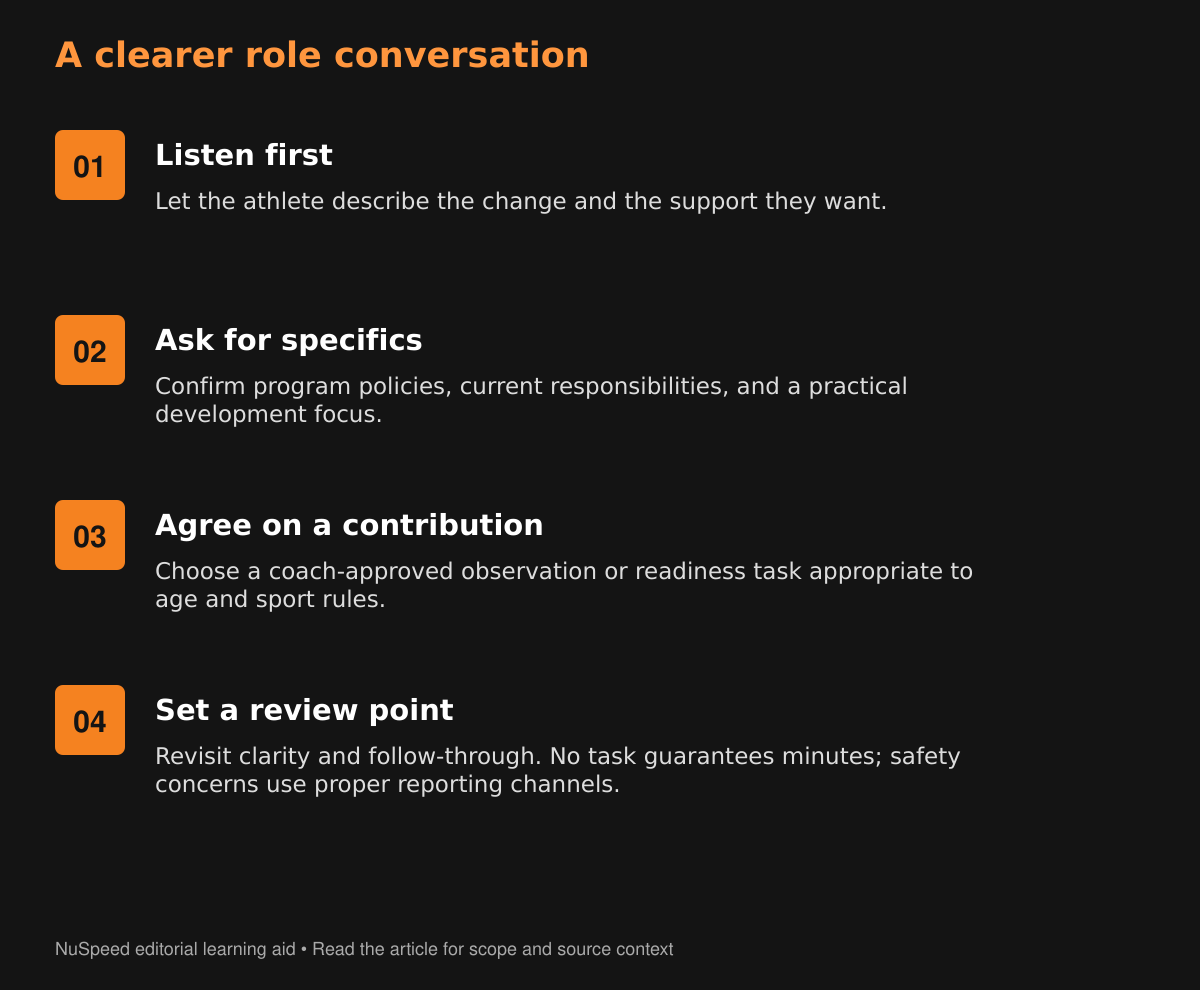
Ask the coach for a suitable time outside the immediate emotion of competition. Depending on age and program policy, the athlete might lead the conversation, join a parent, or have an adult speak for them. A useful proposed question is: What are the specific responsibilities you need from me in this role, and what should I work on next? This is suggested wording, not an attributed quote.
Seek examples the athlete can act on. A request to communicate earlier, learn an assignment, or execute a particular skill can become a practice objective. A vague instruction to want it more leaves much less to work with. Ask when progress can be reviewed. No family should assume that completing a checklist guarantees a starting place unless the coach has actually made that commitment.
Make bench contribution specific
An athlete outside the game can have a defined job without being handed a vague demand to bring energy. Our proposed approach is to agree on one useful observation and one readiness responsibility with the coach. That could mean tracking a particular team pattern, listening for the next assignment, or preparing to enter within the sport’s rules. The coach should determine which information is useful and how it should be communicated.
Keep these responsibilities proportional to the athlete’s age and experience. A young person should not become the team’s unpaid analyst to earn acknowledgment, and a substitute should not be expected to act as another coach. The objective is a clear connection to the team’s work. Bench behavior should also comply with the competition’s rules and avoid distracting opponents or confronting officials.
Keep the athlete in the discussion
The USOPC’s Quality Parenting Framework treats parents and guardians as participants in building quality sport environments and provides role-specific resources for communication and support. It offers a useful starting point for adults who want to help without taking over every interaction. Source: USOPC Quality Parenting Framework.
At home, ask what kind of support the athlete wants before offering a detailed performance review. They may want help preparing a question, a ride without analysis, or time to think. Keep other players out of the comparison. Criticizing a teammate who received the minutes can make an already difficult situation more personal and distract from the information the athlete actually needs.
Revisit the issue after the agreed review point. Has the role become clearer? Is feedback consistent with what was discussed? Is the program following its own participation policy? If answers remain unclear, use the team’s established escalation process. Safety or misconduct concerns require their appropriate channels and should not be treated as ordinary playing-time disputes.
A late-season role may remain smaller than the athlete hoped. The conversation can still produce something valuable: a specific next step, an honest understanding of the team’s expectations, and a clearer basis for deciding what kind of program to choose next. Finishing the season with respect should include respect for the athlete’s experience as well as the team’s goals.
For more practical youth-sports coverage, visit NuSpeed Network at nuspeednetwork.com.
AI disclosure: This draft was created with AI assistance using the linked sources. It is pending human editorial review and approval before scheduling or publication.
Sources