

The space between seasons is a useful time to compare interests, commitments, and local options without turning every decision into a long-term verdict.
AI-generated editorial illustration of a fictional scene. No actual athlete, team or event is depicted. Decorative maps, calendars and screens are conceptual, not factual records or instructions.
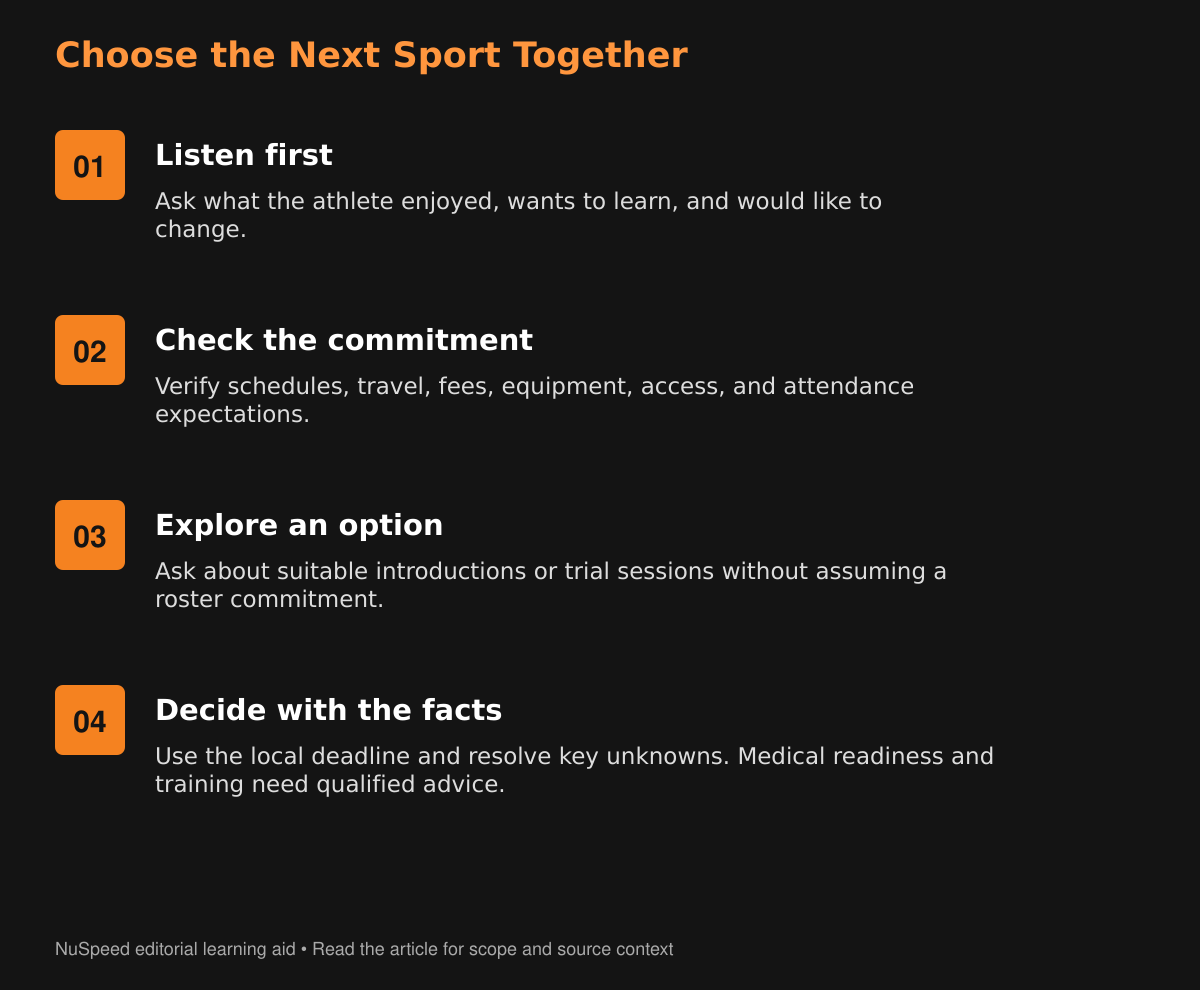
The next registration form can arrive before a family has talked about the season that is ending. A familiar team may feel like the obvious choice. A new sport may sound exciting until its schedule becomes clear. Before committing, give the athlete a chance to describe what they want from the next experience.
That answer may include competition, friendship, learning a new skill, staying with a coach, or trying something unfamiliar. It may also be uncertainty. A young person’s current preference deserves attention without being treated as a permanent statement about their athletic future.
Start with the experience, not the résumé
The U.S. Olympic & Paralympic Committee’s American Development Model includes multi-sport participation, developmentally appropriate activity, access, and an engaging environment among its principles. Its stage descriptions also recognize pathways centered on different interests and levels of competition. Those principles offer context for a conversation; they do not decide which sport a particular child should choose.
Editorial guidance: We suggest beginning with concrete memories. Which part of the recent experience did the athlete look forward to? What was harder than expected? Which activity would they try if they did not have to be good at it immediately? Listen to the answer before proposing a solution.
A child who wants to change sports may be curious, frustrated, overscheduled, or responding to a specific problem. Those situations need different conversations. Avoid assuming that a new interest means a lack of commitment, or that staying with a familiar sport always reflects genuine enthusiasm. Ask enough to understand the reason without conducting an interrogation.
Compare the actual commitments
Build a simple picture of each realistic option. Ask about practice days, travel, expected attendance, equipment, fees, trial opportunities, accessibility, and who will coach. Include the full family logistics, such as pickup arrangements and overlapping responsibilities. A program’s headline fee does not tell the whole story of what participation will require.
Keep unknown information visible. If tournament dates or additional costs have not been announced, record that uncertainty and ask the program when it will be resolved. Do not make an attendance promise based on an imagined schedule. Families can also ask about registration deadlines and refund terms before paying.
This comparison does not need to produce a ranked spreadsheet of a child’s interests. Its purpose is to identify options the athlete wants and the household can realistically support. A less demanding or less expensive program may be a sensible fit without being described as a lesser athletic choice.
Make room to learn before deciding
Where a program offers an appropriate introductory session, open house, or conversation with staff, use it to gather information. Verify the activity’s requirements and suitability with the organizer. Attending an introduction should not be presented as a commitment to a roster place or a guarantee of future access.
Ask the athlete what they want to learn from that visit. They might want to understand how a practice works, whether beginners are welcome, or how the coach explains new tasks. A parent might need to understand transportation or communication expectations. Bringing those questions in advance makes the visit more useful.
Be precise about what is being chosen. A single session, a short program, and a full competitive season are different commitments. Where an option is reversible, say so accurately. Where money, team obligations, or roster rules make a change difficult, explain that before registration rather than after enthusiasm has become pressure.
Separate planning from medical or training decisions
Changing a calendar does not establish readiness for a new physical workload. Questions about pain, recovery, injury, or an individualized training plan belong with appropriately qualified professionals. This article does not prescribe time off, exercise volume, or a transition program.
Our proposed final note records the athlete’s preferred option, the practical conditions that must be met, and any unanswered question. Set a decision date based on the actual local deadline, leaving time to obtain missing information. School and club seasons vary, so there is no universal month when every family should have this conversation.
The editorial aim is a choice the athlete understands and can help own. Sport can remain important while its role changes from one season to another. A thoughtful next step begins with the person who will be showing up to play.
Continue the conversation: Visit nuspeednetwork.com for NuSpeed Sports Whistle.
AI disclosure: This draft was prepared with AI assistance. Sources were checked October 3, 2026. Human editorial review and approval are pending. Do not publish or schedule this draft.
Sources