
An accessible team event gives participants useful information, meaningful choices, and a real say in how they take part.
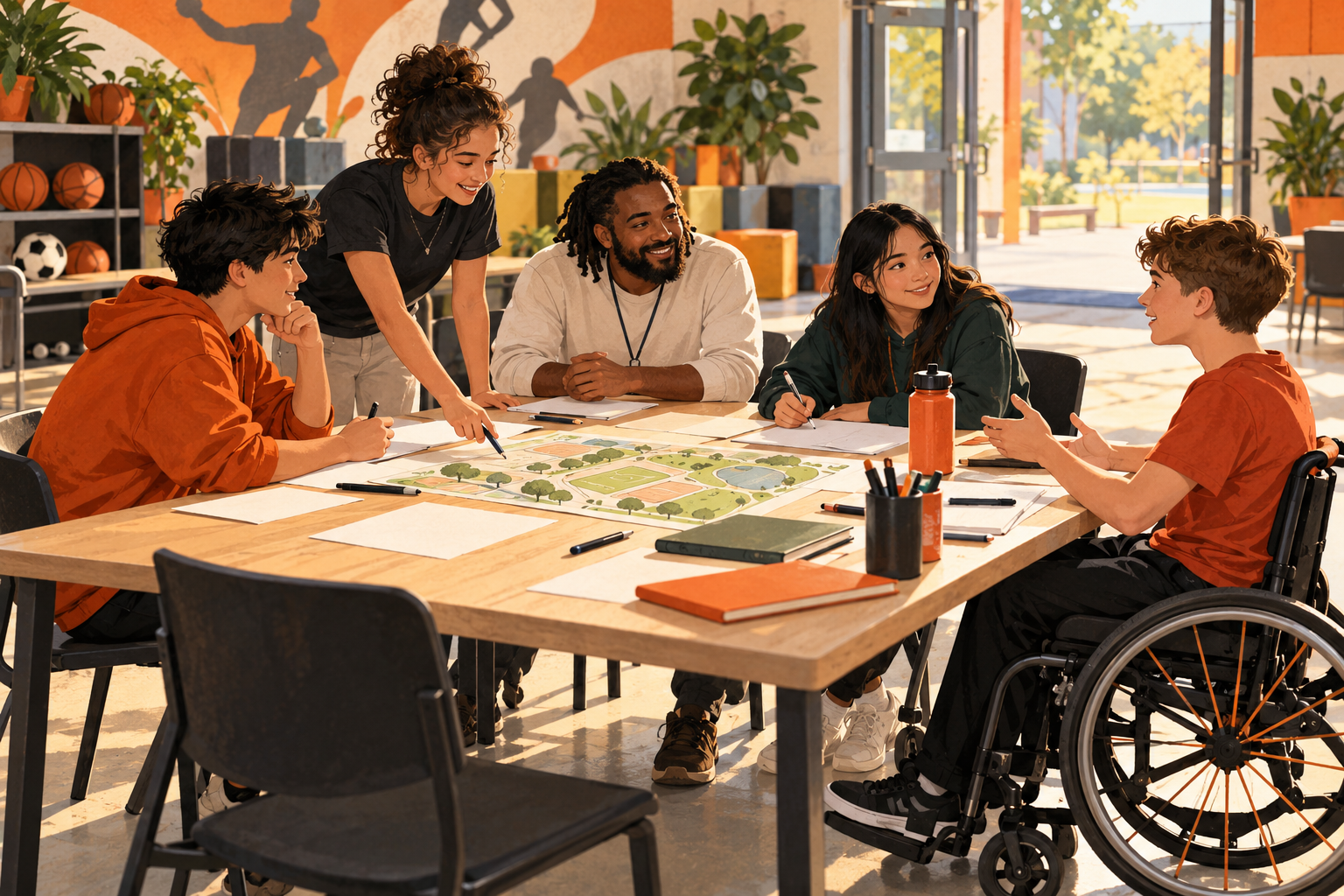
AI-generated editorial illustration of a fictional scene. No actual athlete, team or event is depicted. Decorative maps, calendars and screens are conceptual, not factual records or instructions.
A team can invite everyone and still design an activity that some people cannot meaningfully join. The barrier may be an entrance, a rapid spoken explanation, an unexpected noise level, a transportation gap, or an assumption about how a participant should move. Inclusion becomes more practical when organizers look for those barriers before the event.
The first question is what people will actually get to do. Being present in a group photograph is different from having an active role, a choice, or a chance to contribute. The participant’s own goals should help define a worthwhile experience, rather than an organizer deciding in advance what someone will enjoy.
Ask about participation without demanding a story
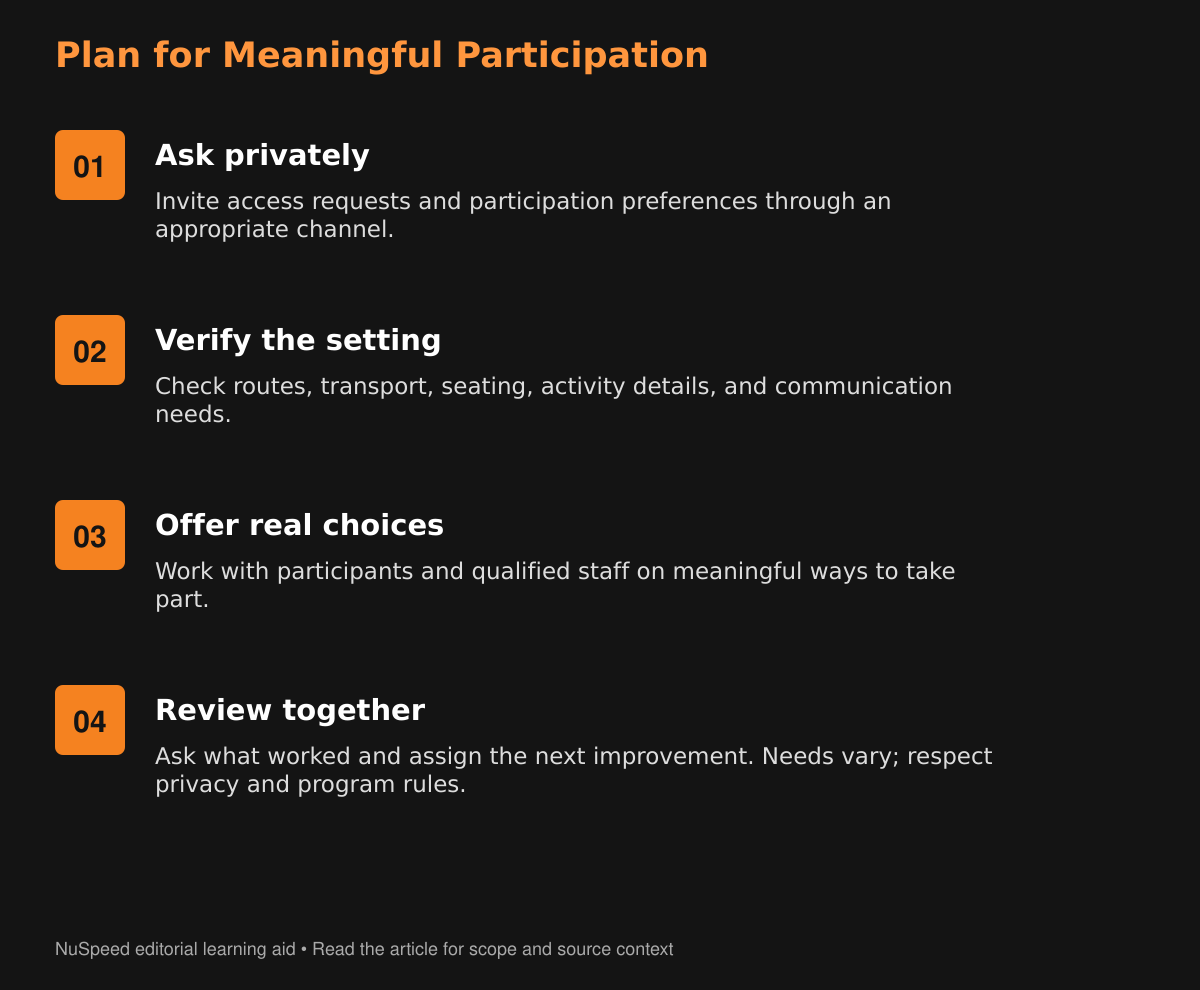
Editorial guidance: We recommend asking what would help someone take part, using a private and accessible route for the response. Explain who will receive the information and why. Do not require a public account of a disability, medical history, or family circumstance as the price of requesting a change.
Offer useful event details up front: the location, route into the activity area, approximate schedule, available seating, expected sound or lighting, and the person who can answer access questions. Verify those details with the venue rather than relying on a vague statement that the building is accessible. When something remains unknown, say so and find out.
For young participants, involve the appropriate parent or guardian and program staff while still listening directly to the athlete in a way that works for them. People should not have to repeatedly explain the same request to every volunteer. Share only the information needed to arrange participation, within the program’s privacy procedures.
Build choices into the activity
Special Olympics Unified Sports brings people with and without intellectual disabilities together on teams. Its Unified Sports resources emphasize meaningful involvement, including opportunities for teammates to contribute. That is a useful reference for thinking about participation, while recognizing that Unified Sports has a specific program model and is not a label for every inclusive activity.
For a proposed team social event or learning session, organizers might offer spoken and written instructions, a demonstration before starting, different ways to complete a noncompetitive activity, and a quieter place to pause. These are planning options to discuss, not universal accommodations or changes to an official game’s rules.
Check whether a choice still serves the activity’s purpose. If the aim is to let teammates learn about one another, a timed relay may not be necessary. If the purpose is formal sport instruction, work with qualified staff on appropriate adaptations and equipment. Avoid moving someone into a spectator or helper role automatically when they want to participate as an athlete.
Give participants influence over the plan
Invite feedback early enough that it can change something. Asking about access after the venue is booked and the activity fixed can leave people with the burden of working around decisions they did not help make. A short planning conversation may reveal a simple adjustment, or a genuine limitation that requires a different venue or activity.
Shared leadership also matters. Participants can help choose activities, explain a preference, demonstrate a skill, or review the plan in a format that suits them. Do not assume that the most verbal teammate should speak for everyone. Allow time for written responses, supported communication, or a later conversation where appropriate.
Money and transportation deserve the same practical attention. State any cost plainly and explain available program support without requiring people to disclose financial circumstances in the group. An event that ends after the last available ride may exclude a teammate even when the venue itself works well.
Review the experience with the people who attended
Our proposed closing question is simple: What made it easier or harder to participate? Accept an answer that differs from the organizer’s impression. A busy room and smiling group photo do not tell the whole story, and someone who chose not to attend may have important feedback too.
Record agreed improvements without turning personal information into a general team document. Assign responsibility for the next change and check whether it happened. Inclusion is an ongoing design responsibility, not a claim earned by using the right wording on an invitation.
These ideas are practical editorial suggestions, not a legal compliance assessment or a substitute for individualized professional advice. The goal is an activity people can understand, reach, help shape, and participate in meaningfully. That work can begin well before the first teammate arrives.
Continue the conversation: Visit nuspeednetwork.com for NuSpeed Sports Whistle.
AI disclosure: This draft was prepared with AI assistance. Sources were checked October 3, 2026. Human editorial review and approval are pending. Do not publish or schedule this draft.
Sources
- Special Olympics: Unified Sports
- Special Olympics: Unified Sports resources and meaningful involvement