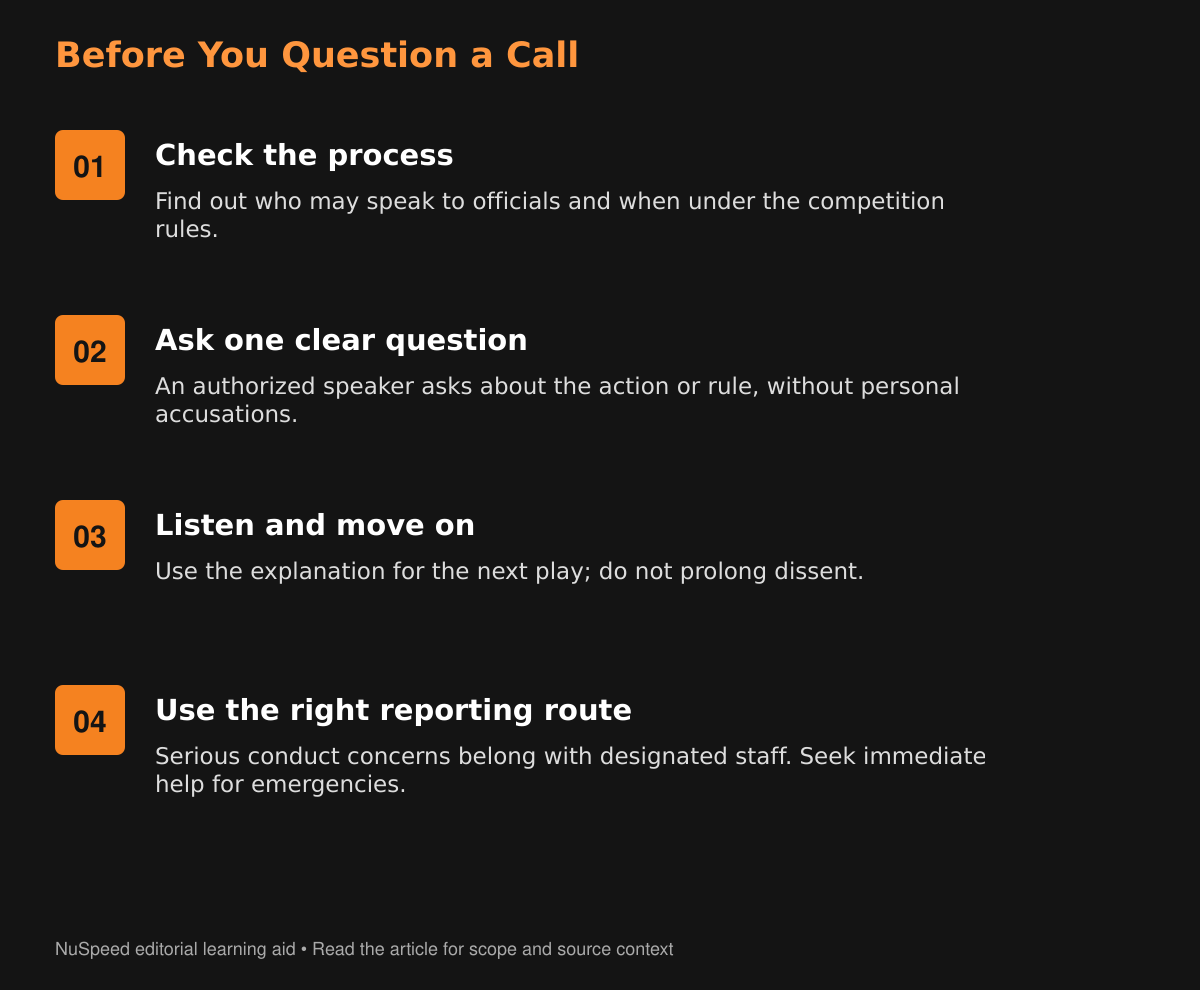

Respectful questions have a purpose, a proper speaker, and a stopping point. Start by learning the process for your sport.
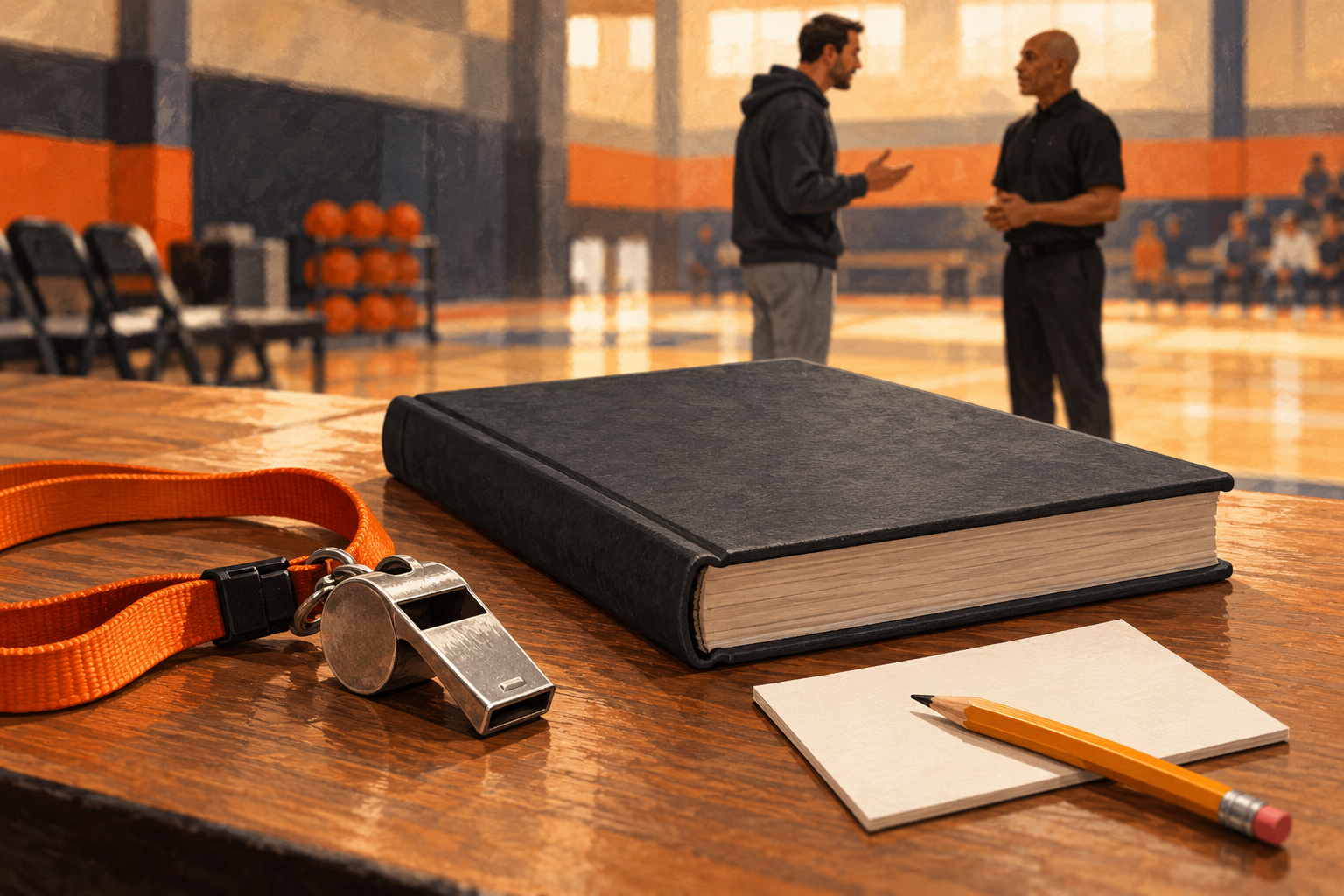
AI-generated editorial illustration of a fictional scene. No actual athlete, team or event is depicted. Decorative maps, calendars and screens are conceptual, not factual records or instructions.
A disputed call can leave an athlete with a genuine question. What did the official see? Which action caused the violation? What needs to change on the next play? Getting an answer begins with understanding who is allowed to ask, when the conversation can happen, and what the rules permit.
There is no single sideline script that works in every sport. A captain’s role in one competition does not establish a right to approach an official in another. Youth leagues, school associations, and tournament organizers can have different procedures. Families should learn those procedures before a tense moment turns into a public argument.
Find the right route before game day
The NFHS 2026–27 basketball points of emphasis place responsibility for communication with officials on the head coach and emphasize professional conduct. That is a basketball example, not a universal authorization for athletes or spectators to interrupt an official. Ask your coach or program administrator how clarification works in the competition you are actually entering.
The NFHS Officials Code of Ethics also sets expectations for officials, including impartial enforcement and respectful verbal and nonverbal communication. Respect is a shared standard. It does not mean pretending every decision is beyond discussion, and it does not remove the need to use an appropriate reporting process for a serious concern.
Make the question answerable
Editorial guidance: Our proposed test for a useful question is whether an answer would help the team understand the decision or its responsibilities. A question about what action was penalized has a specific purpose. A demand that an official defend their character or competence usually takes the exchange away from that purpose.
For a coach who is authorized to ask, a possible wording is: “Could you clarify which action caused that call?” This is a suggested example, not a quotation from a real game or a guarantee that an explanation will be available. The timing, tone, and competition rules still matter. An official may need to manage the next phase of play before responding.
Keep the question brief. Listen to the complete answer. If the explanation identifies something the team can adjust, pass that information to the players. Repeating the same objection in different words can turn a request for clarification into prolonged dissent. Learning the answer does not depend on persuading the official to reverse a judgment.
Give athletes something useful to do next
Coaches can establish a simple team response before competition: return to the next responsibility, let the authorized person handle the question, and avoid adding a second argument. That response should be taught as part of team conduct rather than introduced only when an athlete is upset.
For spectators, the practical route is usually through the team’s designated staff or event management, following local policy. Shouting a question from the stands does not create a right to an on-court discussion. Parents can ask the program in advance how to raise concerns without approaching officials during or immediately after a contest.
These habits also leave room for adults to admit what they do not know. A limited viewing angle, an unfamiliar rule, or missing context may change how a play is understood. Reviewing the applicable rule later can be worthwhile even when the result of the game will not change.
Separate a learning question from a serious concern
A concern about threats, discriminatory conduct, or another serious incident deserves the appropriate reporting route. Do not reduce it to a lesson about accepting calls. Record specific observations and use the program’s designated process; avoid posting accusations or identifying young participants in a public argument. For an immediate emergency, seek event staff or emergency assistance promptly.
Our proposed after-game note has three parts: what was observed, what rule or procedure needs clarification, and who is responsible for responding. It should distinguish firsthand information from assumptions. Keep any video or personal details within authorized channels.
As each local season begins, a five-minute explanation of the communication process can be more useful than another general instruction to behave. The editorial goal is straightforward: make room for learning while allowing officials, athletes, and coaches to do their jobs. A respectful question should lead somewhere specific, and everyone should know when the conversation is finished.
Continue the conversation: Visit nuspeednetwork.com for NuSpeed Sports Whistle.
AI disclosure: This draft was prepared with AI assistance. Sources were checked October 3, 2026. Human editorial review and approval are pending. Do not publish or schedule this draft.
Sources