

A short reflection can preserve useful lessons without turning a season into a permanent judgment about an athlete.
AI-generated editorial illustration of a fictional scene. No actual athlete, team or event is depicted. Decorative maps, calendars and screens are conceptual, not factual records or instructions.
The final result is easy to remember. The small adjustment that made practice more useful, the communication problem that kept recurring, or the moment an athlete began asking better questions can be easier to lose. An end-of-season reflection gives those details somewhere to go before the next schedule fills the calendar.
The exercise does not need to become a report card on personality. Its purpose is to preserve information that can improve a future decision. A few specific observations, written with the athlete rather than about them, may be more usable than pages of general praise or criticism.
Let the athlete describe the season first
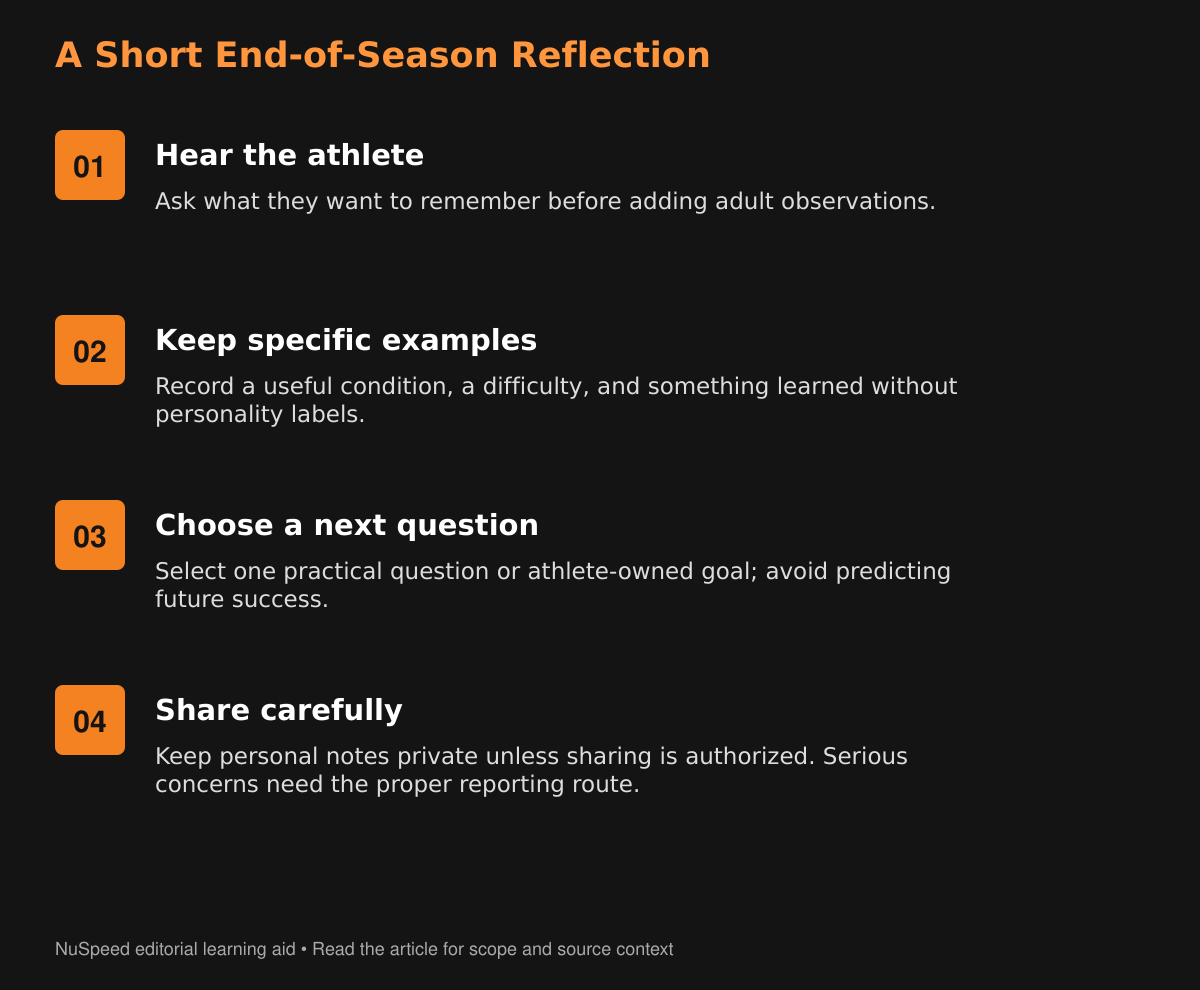
Editorial guidance: We suggest beginning with an open invitation: What would you want to remember about this season? Allow the athlete to choose a starting point. It may be a friendship, a new responsibility, a difficult stretch, or a part of the sport that became more enjoyable.
Listening is a concrete part of sport administration at other levels, too. The USOPC Athlete Listening program gathers athlete feedback to understand experiences and inform changes. A family or community team does not need to copy an elite program’s survey. The relevant idea is that the people participating should have a voice in evaluating the experience.
Adults can add observations after hearing the athlete’s account. Separate what was seen from the meaning assigned to it. “You asked the coach to explain the drill” describes an action. A sweeping claim about confidence or character goes beyond that observation and may not match the athlete’s own experience.
Keep examples that explain a change
Our proposed reflection tool uses four short sections: something worth keeping, something that was difficult, something learned, and one question for next time. These are editorial prompts, not an official evaluation instrument or a scientifically validated scorecard. Leave a section blank if it does not produce a useful answer.
For something worth keeping, look for a repeatable condition. Perhaps the athlete found a particular explanation useful or appreciated receiving the schedule earlier. Ask what made that helpful. The answer may suggest a practical request for the next program without claiming that the same approach will work for everyone.
For a difficulty, describe the circumstances and any attempted response. A note that transportation made a certain practice time unworkable points toward a scheduling decision. A label such as unreliable can obscure the problem and follow an athlete into settings where it does not belong.
Include the coach without outsourcing the athlete’s voice
If the program offers an appropriate end-of-season conversation, ask for a small number of specific observations and clarify what the coach means. The USOPC Quality Coaching Framework provides a broader reference for quality coaching principles; it is not a promise that a particular team uses that framework.
A useful question is what the coach noticed changing over the season. Another is which skill or responsibility would be worth discussing with the next coach. These are proposed questions, not requests for a prediction about scholarships, selection, or future success. Keep any technical plan within the scope of appropriately qualified instruction.
The athlete should be able to say that a coach’s interpretation does not fit their experience. Record that difference fairly rather than forcing one tidy conclusion. Agreement is helpful, but a reflection can also preserve an unanswered question that deserves another conversation.
Choose what to carry forward and what to keep private
A next-season note might contain a preferred communication method, a practical schedule constraint, and one learning goal the athlete has chosen. It does not need to include every disagreement, private family detail, or teammate’s name. Share only relevant information through authorized channels and ask before forwarding a personal reflection.
Health concerns, possible misconduct, or other serious issues need their appropriate professional or reporting route. Do not leave them as a vague item in an end-of-season notebook. Likewise, a reflection is not medical clearance or an individualized training prescription.
Finish by deciding whether anything needs action now. Return equipment, resolve an unanswered program question, or record the actual date of a future registration decision. If nothing needs to happen yet, let the note remain a record rather than converting every insight into another assignment.
Local seasons end at different times. Whenever that point arrives, our editorial recommendation is to keep the review brief enough to revisit and specific enough to matter. The best note makes the next conversation easier while leaving the athlete room to change, learn, and choose again.
Continue the conversation: Visit nuspeednetwork.com for NuSpeed Sports Whistle.
AI disclosure: This draft was prepared with AI assistance. Sources were checked October 3, 2026. Human editorial review and approval are pending. Do not publish or schedule this draft.
Sources