
The most useful clues are often in the explanation, the correction, and the way a coach treats the athlete who is still learning.
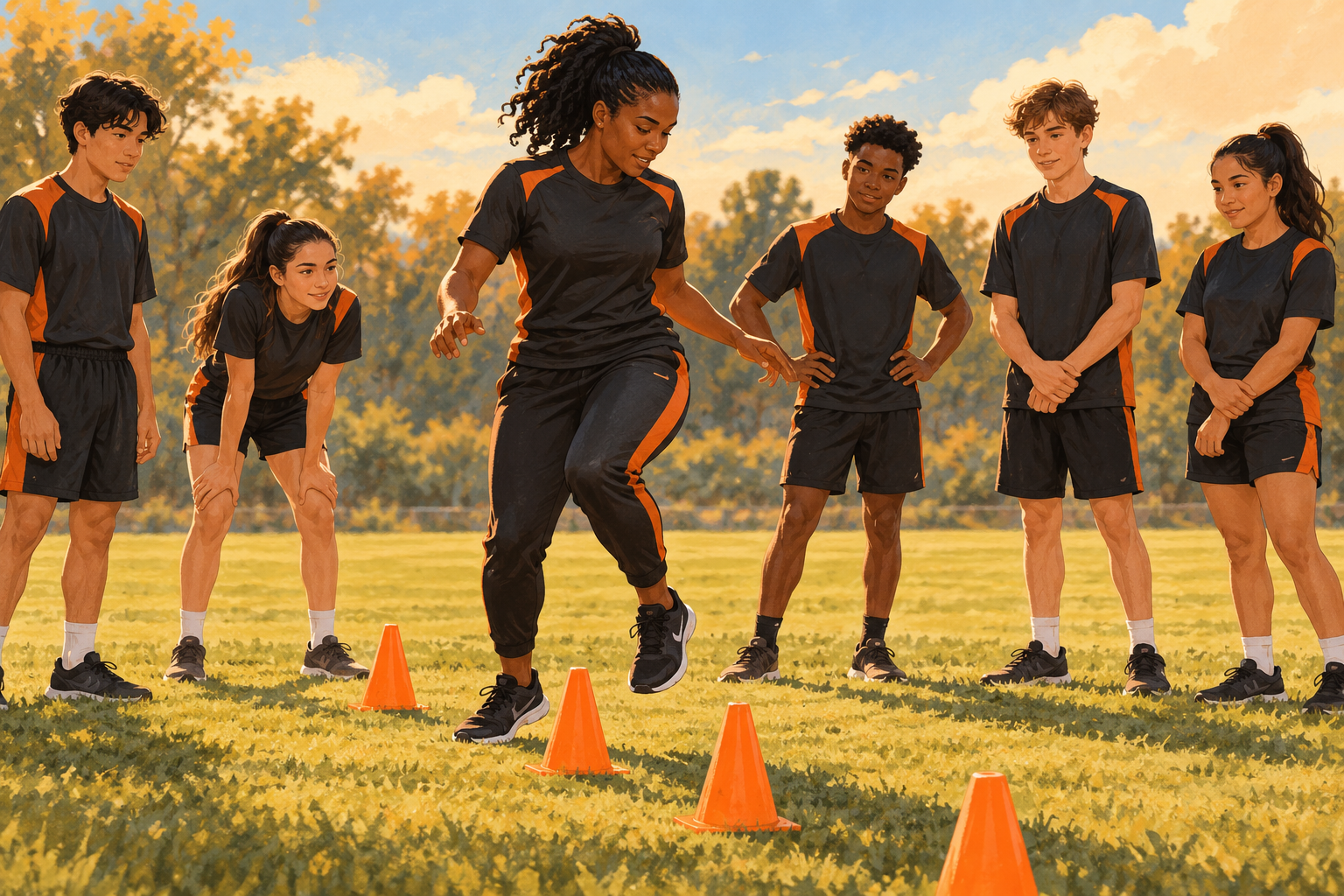
AI-generated editorial illustration of a fictional scene. No actual athlete, team or event is depicted. Decorative maps, calendars and screens are conceptual, not factual records or instructions.
A win can make a coach look persuasive. An ordinary practice offers a different kind of evidence. Watch how the coach explains a task, how much opportunity athletes have to try it, and what happens when someone gets it wrong. Families evaluating a program need to understand the everyday experience their child will have, including on days when the team is struggling.
There is an established framework for asking broader questions. The U.S. Olympic & Paralympic Committee’s Quality Coaching Framework includes athlete-centered outcomes, coaching knowledge, contextual fit, evaluation, and coach well-being. Its purpose is to help develop quality coaching across sport settings. A recreational beginner and an experienced competitor have different needs, so quality must be judged in context. Source: USOPC Quality Coaching Framework.
Look for teaching you can understand
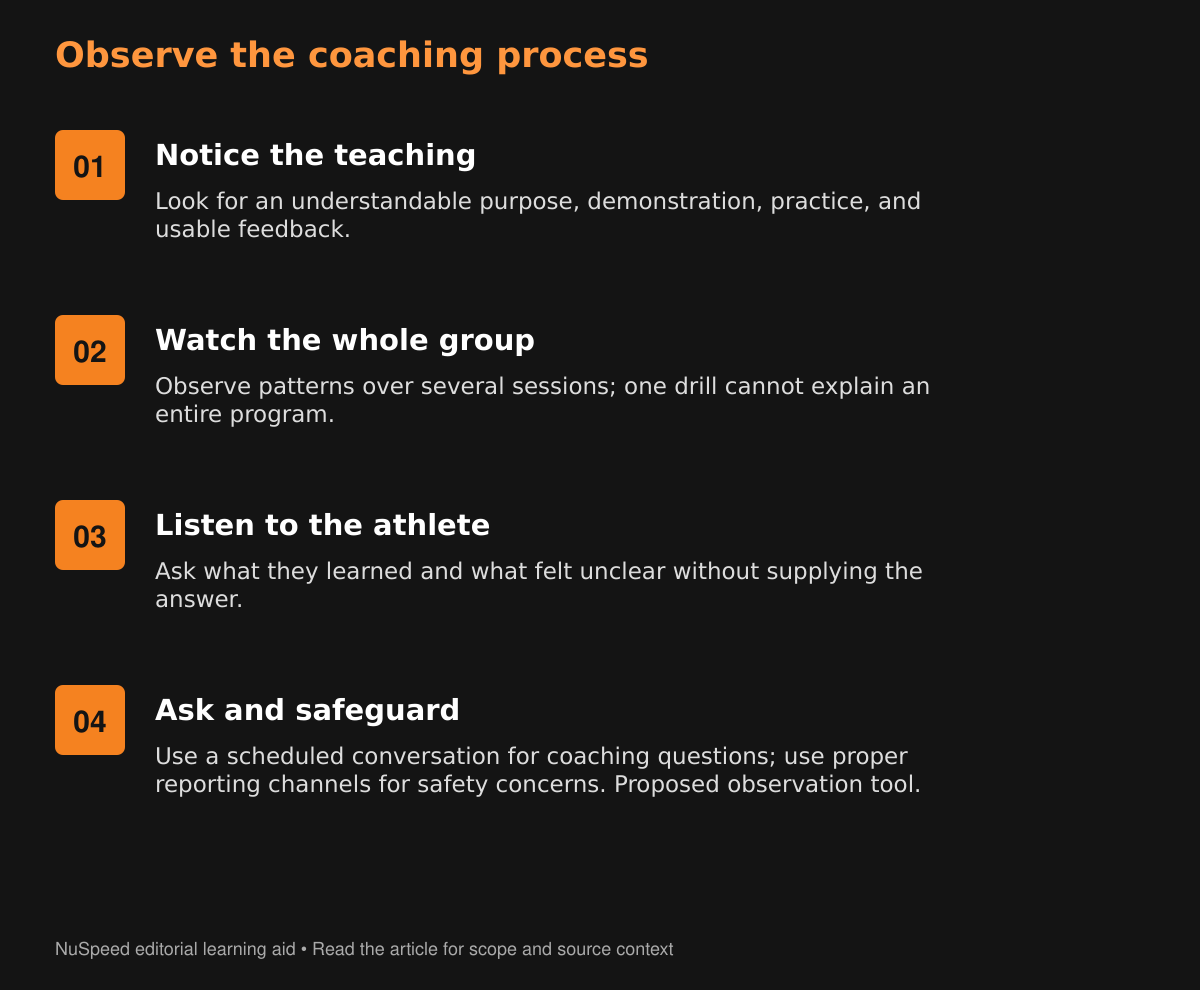
Our editorial recommendation is to begin with the learning task. Can the coach explain what the group is practicing and why? Does the explanation fit the athletes’ age and experience? After an error, does the athlete receive something usable for the next attempt? A parent does not need advanced technical knowledge to notice whether instruction is specific enough to act on.
Imagine a hypothetical observation: a coach asks athletes to communicate earlier during a drill, demonstrates the cue, and gives them another attempt. That is an example of a visible teaching process, not a report from a particular team. The point is to look for explanation, practice, feedback, and another opportunity. A long speech or a demanding drill is difficult to evaluate without knowing what learning it is meant to produce.
Watch the whole group over time. Who gets questions answered? Who receives useful feedback? Who spends most of practice waiting? A single visit can be misleading, and different drills have different purposes. Ask about the practice plan rather than diagnosing the program from one moment. Consistent patterns across sessions provide a more useful basis for a conversation.
Clear expectations include adult behavior
Families should be able to ask how playing time is determined, how concerns are raised, and which safeguarding policies apply. The U.S. Center for SafeSport’s coaching resources encourage clear expectations for respectful communication, a supportive environment, and action against bullying, harassment, and hazing. They also describe safeguards around adult-minor interactions. Applicable requirements depend on the organization and its governing body. Source: U.S. Center for SafeSport coach resources.
Our editorial view is that accountability should be understandable to the athlete. A coach can set demanding standards and explain consequences without making personal humiliation a teaching method. Families can ask what a correction means and how a child can improve. If a child describes threatening, abusive, or unsafe behavior, take it seriously and use the appropriate safeguarding or reporting channels; an ordinary coaching conversation is not a substitute for addressing safety concerns.
Ask the athlete about the experience
After practice, a broad invitation may work better than a performance interrogation. Ask what the athlete learned, what was enjoyable, or what was confusing. Leave room for an answer you did not expect. A child may love a challenging session or dislike one for reasons unrelated to the coach. One answer should not become a verdict, but repeated concerns deserve attention.
For a practical review, we propose three notes after several practices: one thing the athlete is learning, one example of communication, and one question still unanswered. This is an editorial observation tool, not a formal evaluation instrument. Keep it descriptive. Recording that instructions were repeated and demonstrated gives a clearer starting point than labeling the coach good or bad.
Then choose a calm, scheduled time to ask the outstanding question. Request the program’s expectations and listen to the explanation. If the approach fits the athlete’s needs and the coach follows through, that is useful evidence. If concerns persist, discuss them through the organization’s established process. The goal is an environment where learning, challenge, and basic respect can coexist, with adults willing to explain how their coaching serves the young people in front of them.
For more practical youth-sports coverage, visit NuSpeed Network at nuspeednetwork.com.
AI disclosure: This draft was created with AI assistance using the linked sources. It is pending human editorial review and approval before scheduling or publication.
Sources