
A useful review session ends with a clearer decision, a fair question, and a next step.
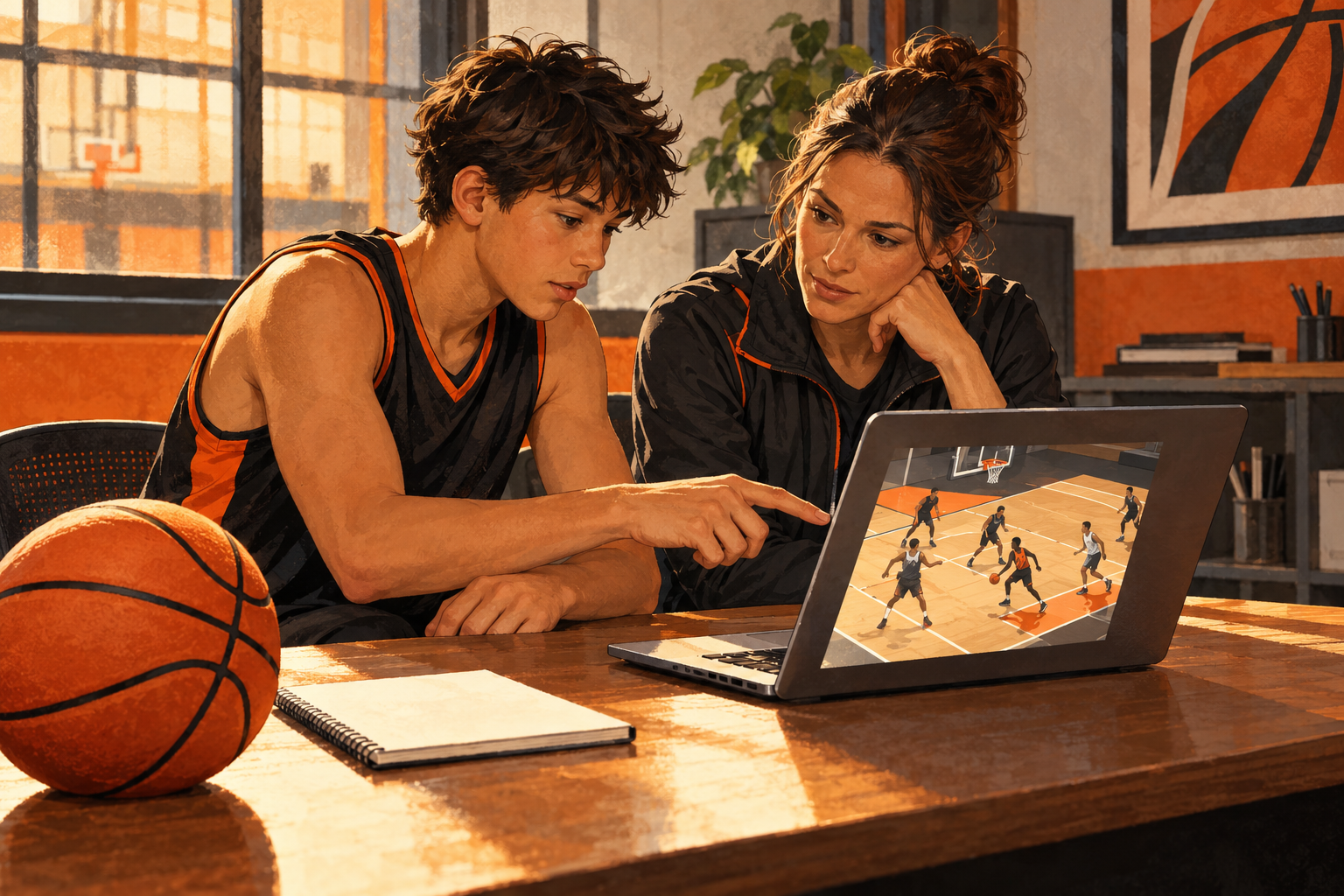
AI-generated editorial illustration of a fictional scene. No actual athlete, team or event is depicted. Decorative maps, calendars and screens are conceptual, not factual records or instructions.
A paused video can make a mistake look obvious. The passer has an open teammate. The defender has a runner behind them. The ball is about to land in the space nobody covered. From the comfort of a chair, there seems to be plenty of time to choose.
The athlete did not have a pause button. That is the starting point for a more useful film session: rebuild the situation before judging the result. What could the player see? What information arrived late? What instruction had the team practiced?
This article proposes a review method rather than reporting a particular team’s experience. It is meant for coaches and families who already have authorized access to footage and want to use it for learning.
Choose one question before opening the video
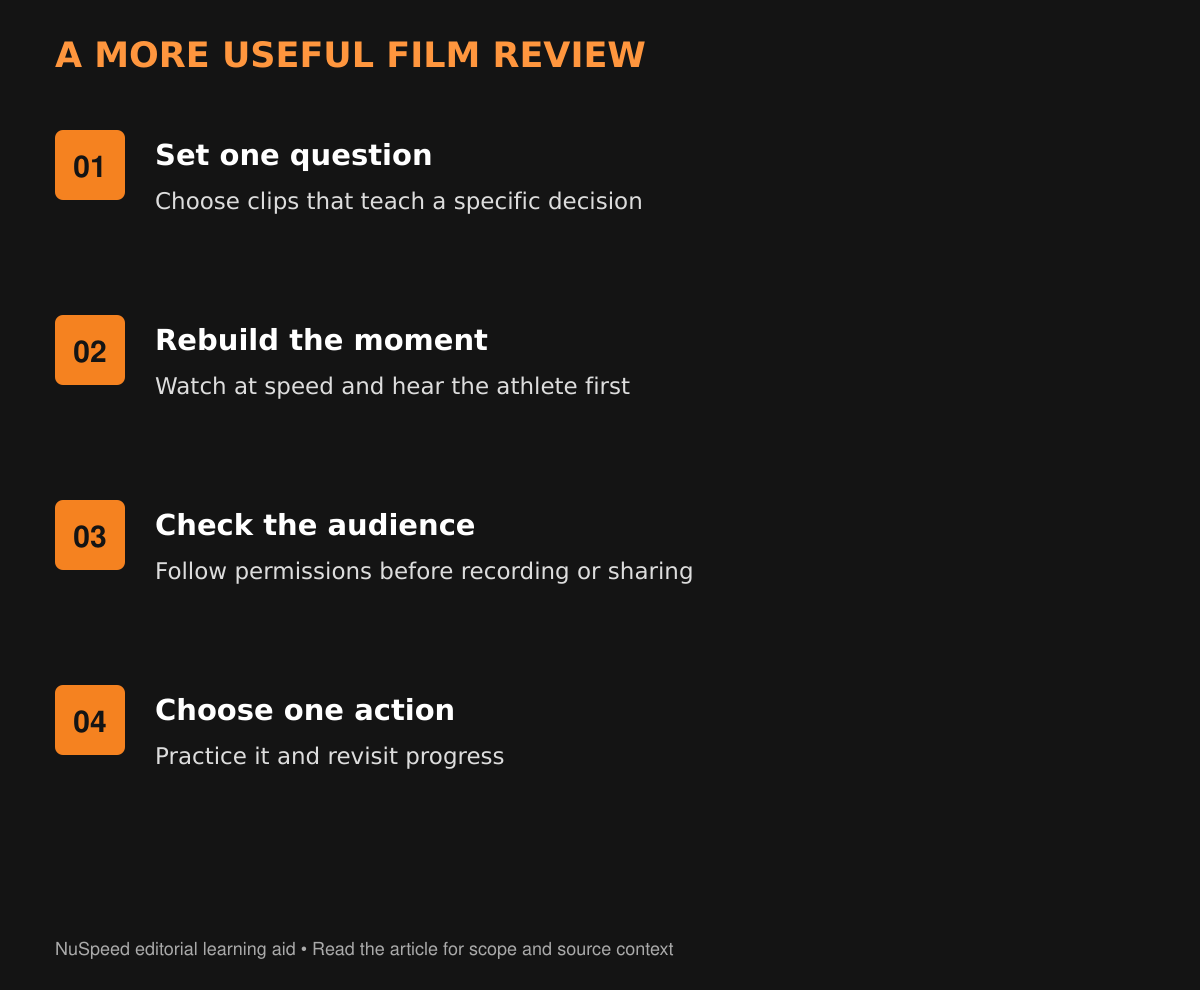
NuSpeed’s suggested approach: Decide what the session is for. Perhaps the team is studying how it recognizes an open teammate or how it gets organized after a turnover. Choose clips that illuminate that question. A collection of every error can become a list of grievances without giving anyone a manageable skill to practice.
Play the relevant sequence at normal speed before slowing it down. Ask the athlete what they noticed. Let them finish. The answer may reveal a misunderstanding of an assignment, a useful intention with poor timing, or a limitation the camera angle hides.
A coach can then distinguish the decision from the execution and the outcome. A sensible pass can be mishit. A questionable pass can get through. Discussing those separately gives the player something more precise than a verdict based on whether the play worked.
Put the coach on film too
Positive Coaching Alliance recommends video as a tool for coaches to evaluate their own behavior, including their communication and athletes’ responses. Its resource directs attention toward the adult’s contribution to the environment. PCA coaching self-evaluation resource
Apply that lens alongside the player review. Was the instruction clear? Did two adults give competing directions? Did the coach explain the cue they now expect the athlete to recognize? Film can help a staff identify an assignment it needs to teach again.
The point is not to excuse every error. It is to make accountability specific enough to be useful. An athlete can work on checking a space before receiving. A coach can work on explaining when that check matters. Both have an action for the next practice.
Keep the audience tied to the purpose
Footage collected for coaching should not casually become public entertainment. Before recording, uploading, or forwarding a clip, follow the school or club’s permissions and platform policies, and confirm the intended audience. Be especially cautious about visible names, injury moments, private conversations, and clips that single out a child.
For schools, the U.S. Department of Education explains that a video’s status under FERPA depends on context, including whether it directly relates to a student and is maintained by the institution or someone acting for it. That does not support a blanket claim that every sports video is protected, or that every public-event recording is unrestricted. Ask the school’s designated administrator about its requirements. This is general information, not legal advice. Education Department video FAQ
End with one repeatable action
Close by asking the athlete to describe what they will try. Make it observable: check the weak side before the next pass, identify the assigned runner, or ask for a clearer cue. Then plan a chance to practice it under the coach’s direction. A long list of corrections can wait.
NuSpeed’s editorial view: Embarrassment is a poor purpose for a film session. A player should be able to leave knowing both what needs work and how to begin. Honest feedback can be direct without turning a young athlete into the punchline.
At the next review, return to the original question. Look for an example of the desired decision, including a useful choice that did not produce a highlight. That follow-through tells athletes the staff is watching for learning as well as mistakes.
Find more practical youth-sports coverage at nuspeednetwork.com.
AI disclosure: AI assisted with research, drafting, and graphic development. This article awaits human editorial review and approval.
Sources
- Positive Coaching Alliance coaching video self-evaluation
- U.S. Department of Education photos and videos under FERPA FAQ