
A family-ready plan for alerts, shelter, communication, and the decision to resume, grounded in official safety guidance.
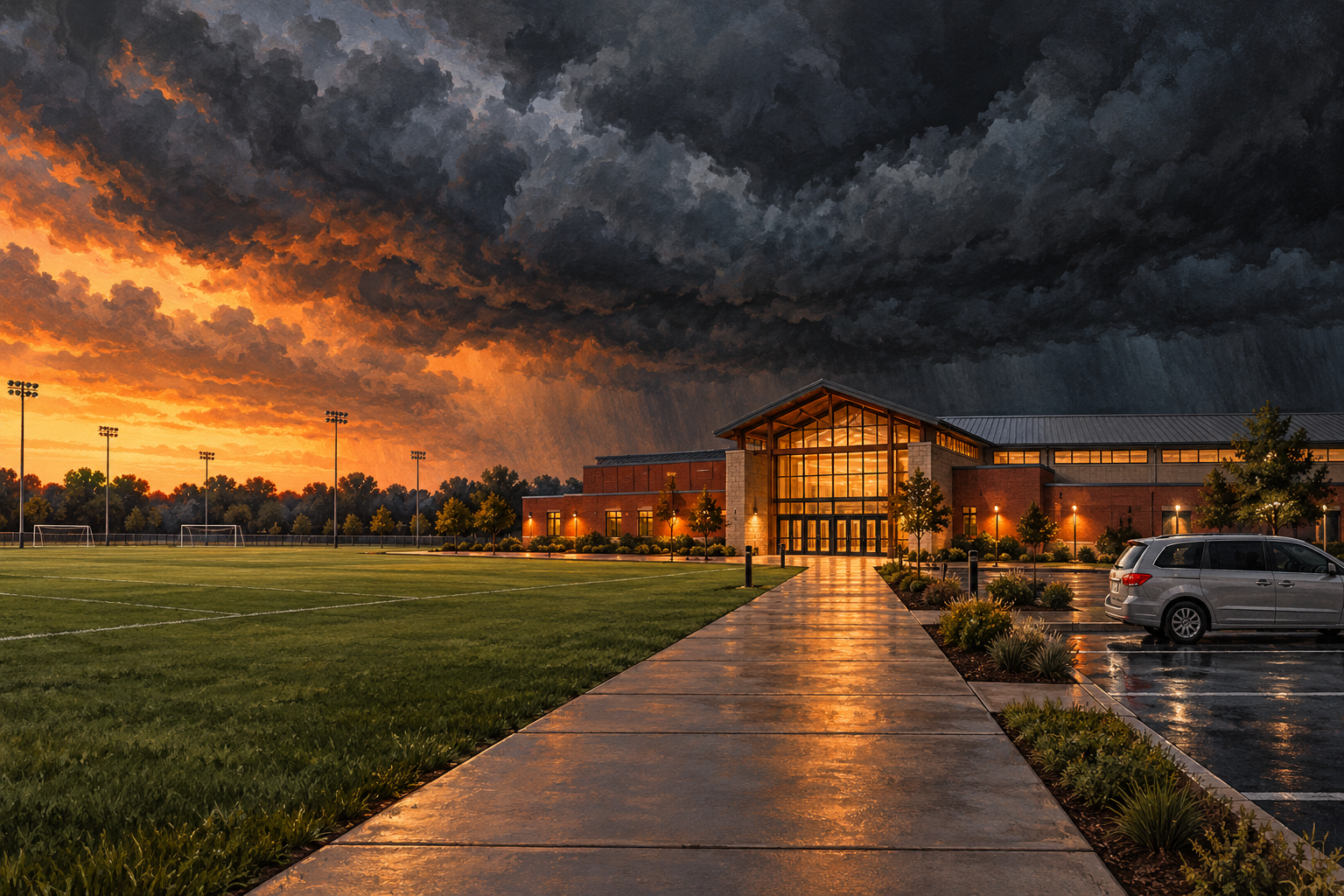
AI-generated editorial illustration of a fictional scene. No actual athlete, team or event is depicted. Decorative maps, calendars and screens are conceptual, not factual records or instructions.
Weather readiness begins before anyone asks whether a game will be called. At an unfamiliar complex, a family needs to know where safe shelter is, how to reach it, and how the organizer will communicate an interruption. A schedule, a concession roof, and a group chat do not answer those questions by themselves. Clear arrangements help people act when there is less time to decide.
This is general preparedness information, not medical advice or a substitute for emergency instructions. Conditions and local policies vary. Families should follow current official alerts, venue emergency directions, and any individual care plan provided by a qualified clinician. The practical work here is knowing which information matters and where people will go.
Make shelter a specific place
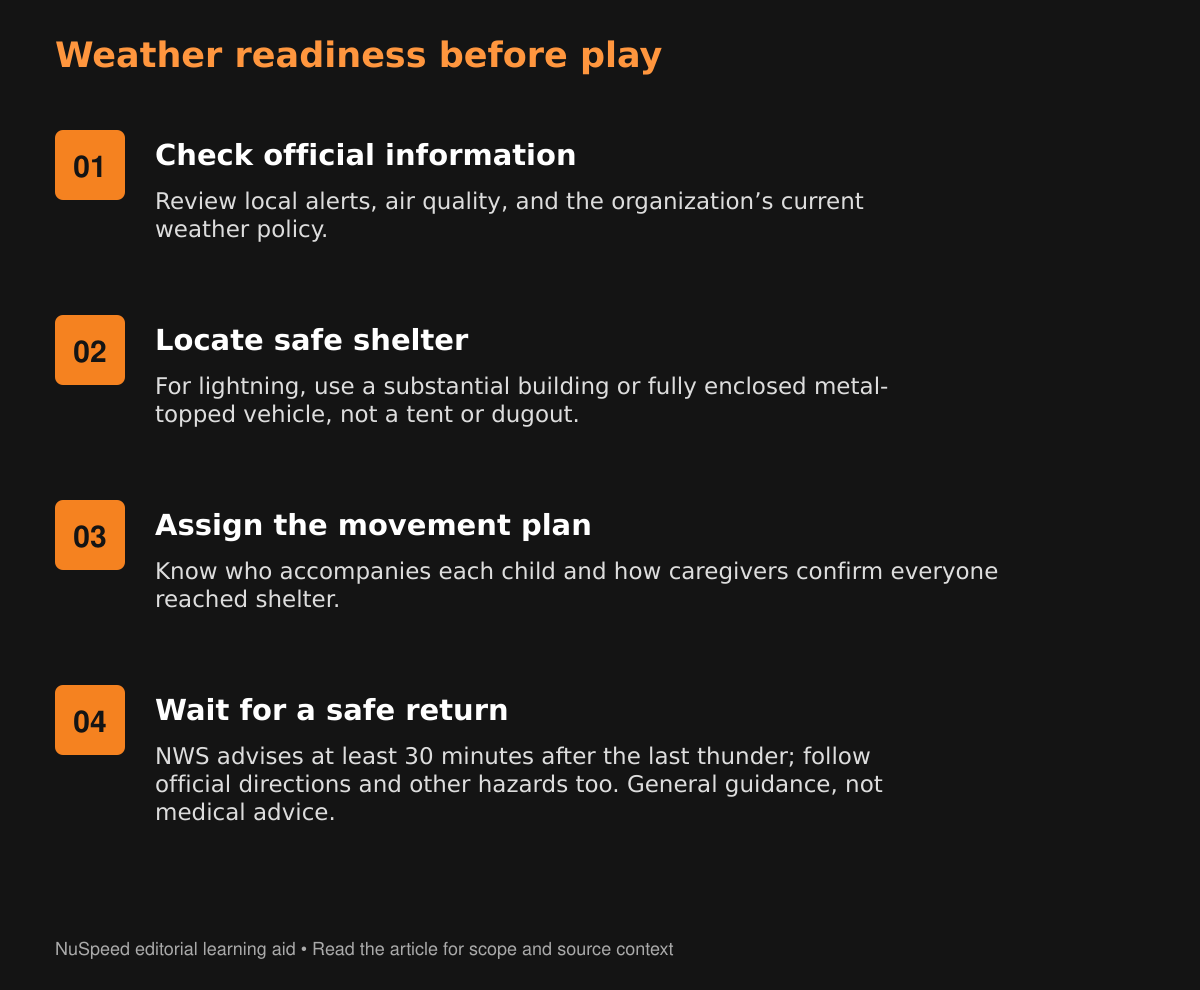
The National Weather Service’s outdoor-sports guidance calls for a lightning safety plan and designated weather monitoring. If thunder is heard, people should move to a substantial building or fully enclosed metal-topped vehicle. Open shelters, dugouts, and rain canopies do not provide safe lightning protection. NWS advises waiting at least 30 minutes after the last thunder before returning to outdoor activities. Additional thunder starts that waiting period again. Source: National Weather Service lightning and outdoor sports guidance.
Before play, ask the organizer which locations are designated and whether there is room for participants and spectators. Identify an accessible route and consider how long it takes to reach shelter from the farthest playing area. Families should not assume they can unlock a building that is closed or squeeze everyone into a nearby structure simply because it has a roof.
Our editorial recommendation is to agree on the movement plan while everyone is calm. Which adult accompanies each child? Where will separated family members reconnect? How will a caregiver know that the athlete has reached the team’s shelter? Keep those responsibilities explicit. Do not delay seeking safety to collect equipment, finish an inning, or wait for a more convenient break.
Check the hazards beyond rain
Weather readiness also includes the route to and from the venue. The National Weather Service warns against driving or walking into floodwater and against going around road barriers. A familiar road can become unsafe, and a navigation app’s suggested route does not override a closure. Source: National Weather Service flood safety guidance.
Air quality deserves a separate check. AirNow’s school-activity guidance provides a framework for modifying outdoor activity when pollution reaches unhealthy levels. Families and organizers should consult current local air-quality information and applicable activity policies rather than judging only by whether the sky looks clear. Individual needs may require additional direction from a clinician. Source: AirNow air-quality and outdoor-activity guidance.
Heat, cold, wind, and other hazards can also affect event decisions. Ask where the governing organization publishes its weather policy and who applies it at the venue. This article does not prescribe temperature cutoffs, hydration amounts, or a personal return-to-play decision. Those details require the applicable sport policy, on-site assessment, and appropriate professional guidance.
Decide how information will travel
A proposed family readiness card can stay brief: official alert source, designated shelter, responsible adults, and update contact. This is our editorial organizing tool, not a replacement for the venue emergency plan. Save the relevant details before arrival and make sure another adult can access them if the primary phone loses power or service. Avoid circulating children’s private information in a public event thread.
If activities stop, distinguish the announcement of a delay from permission to resume. An estimated restart can change. Follow the designated officials and current safety instructions, and do not treat the first people returning to the field as an all-clear signal. A family can also decide to leave a situation it considers unsafe rather than waiting for consensus from other spectators.
Afterward, a short review can expose practical gaps without assigning blame. Was the shelter open? Could everyone hear or receive the message? Did caregivers know where their children were? Raise unresolved issues with the organizer before the next event. The useful measure of a weather plan is whether people can follow it under pressure, with a safe destination and a clear way to account for one another.
For more practical youth-sports coverage, visit NuSpeed Network at nuspeednetwork.com.
AI disclosure: This draft was created with AI assistance using the linked sources. It is pending human editorial review and approval before scheduling or publication.
Sources
- National Weather Service: Lightning Safety and Outdoor Sports Activities
- National Weather Service: Turn Around Don’t Drown
- AirNow: Air Quality and Outdoor Activity Guidance for Schools